Nigeria bombings underscore militant resilience despite years of counterinsurgency
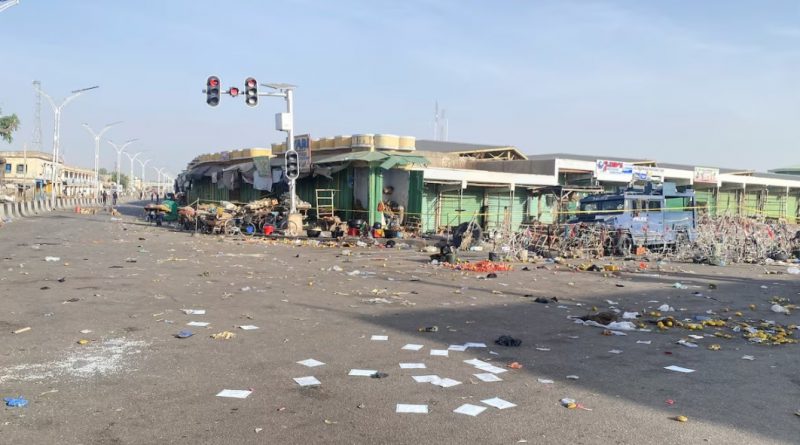
Lagos— Coordinated suicide bombings in Maiduguri, northeast Nigeria’s most heavily defended city, highlight the continued operational capacity of Islamist militants despite years of military campaigns, with analysts pointing to intelligence gaps and the persistence of a complex insurgency, officials and experts said.
Nigeria’s President Bola Tinubu described the attacks as “the final desperate” acts of militants seeking to spread fear, but security analysts said the scale and coordination of the bombings suggest strength rather than decline.
The assault on Maiduguri, the capital of Borno State and the birthplace of the insurgency, involved multiple suicide bombers targeting an urban center long fortified by security forces.
Experts said the incident indicated failures in intelligence and surveillance, allowing militants to penetrate one of the country’s most secured cities.
It remains unclear which group carried out the attack, underscoring the fragmented nature of the insurgency involving Boko Haram and Islamic State West Africa Province (ISWAP), an Islamic State-affiliated faction.
Analysts said recent attacks attributed to both Boko Haram and ISWAP raise the possibility of coordination between the rival groups, which have historically operated separately but share overlapping objectives.
“We have to see this as the groups oozing confidence in their ability to wreak terror in that part of the country,” said Ikemesit Effiong, a partner at SBM Intelligence, a Lagos-based risk advisory firm.
“We think this is the start of a spate of bombings, not just in Maiduguri but also less protected urban areas in the northeast,” he said.
The Armed Conflict Location & Event Data Project (ACLED), a crisis monitoring group, said the attack was the deadliest suicide bombing in Nigeria in seven years.
President Tinubu said he had approved additional equipment and support for the military, reiterating pledges by successive administrations to defeat the insurgents.
Nigeria has fought Islamist militants since 2009, when Boko Haram launched an uprising aimed at establishing an Islamic state. The group was driven from major urban areas after a military crackdown, but it later splintered into factions.
One faction aligned with Islamic State has emerged as the most powerful, controlling parts of northeastern Nigeria and maintaining operational capabilities.
As violence has expanded to other regions, including the northwest, the United States has conducted air strikes and deployed military advisers in support roles, though it remains unclear whether U.S. forces will be involved in responding to the latest attacks.
Despite sustained military operations, analysts said militant groups have entrenched themselves in rural areas, enabling them to regroup and launch attacks intermittently.
Vincent Foucher, a senior research fellow at France’s National Centre for Scientific Research, said insurgent groups have maintained a presence over time, adapting their tactics and exploiting gaps in governance and security.
The latest bombings illustrate the enduring challenge posed by the insurgency, which has killed tens of thousands of people and displaced millions across the region.