Warming reshapes Colorado alpine meadows as long-term study signals global ecosystem shift
“Shrubification is a symptom of this, not the cause, and we need to treat it as such.”
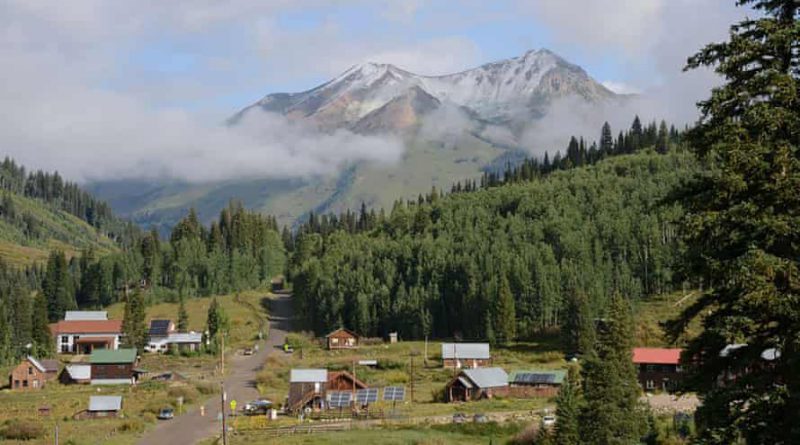
In the high-altitude grasslands of Colorado, known for their dense summer blooms of corn lilies, aspen sunflowers and sub-alpine larkspur, a decades-long ecological experiment is providing new evidence of how climate change is altering fragile mountain ecosystems.
Established in January 1991, the study is among the earliest and longest-running efforts to examine how rising temperatures influence plant and soil systems in alpine environments.Scientists initially expected that warmer conditions would extend the growing season and increase vegetation density.
Instead, the experimental plots showed a steady decline in grasses and wildflowers. Over time, these species were replaced by sagebrush, transforming sections of the meadow into landscapes resembling arid scrubland. Researchers also observed significant changes below ground, where fungal communities in the soil shifted in response to sustained warming.
The findings, published in the Proceedings of the National Academy of Sciences, indicate that such ecosystems may not respond to warming in ways previously anticipated. The study concludes that these meadows could largely disappear in the coming decades if global temperatures rise by 2°C above preindustrial levels.
The transformation observed in Colorado is part of a broader ecological process increasingly documented in cold regions worldwide, commonly referred to as “shrubification.” This process involves the gradual replacement of grasses and low-lying vegetation with woody shrubs and, in some cases, trees.
According to Sarah Dalrymple, a conservation ecologist at Liverpool John Moores University who studies similar changes in Iceland, warming temperatures are reducing environmental constraints that historically limited plant growth in cold climates.
She said that as conditions become less severe, plant communities shift from grasslands or heath ecosystems toward shrub-dominated landscapes, with potential progression to forested environments.
Dalrymple noted that grasses and alpine plants are adapted to short growing seasons and harsh climatic conditions. As these constraints ease, shrubs and trees, which require longer periods to establish leaf and stem structures, gain a competitive advantage.
This transition represents a fundamental reorganization of ecosystems that have remained relatively stable for thousands of years.
While the expansion of shrubs and trees can provide benefits such as increased shelter for wildlife, livestock and human activity, researchers say the broader implications are more complex. Dalrymple said that the spread of woody vegetation in cold regions is associated with processes that can accelerate climate change, particularly through the thawing of permafrost.
Permafrost contains large quantities of stored carbon, and its melting can release greenhouse gases into the atmosphere. Dalrymple said that afforestation in these environments can intensify this process, contributing to increased carbon emissions. She emphasized that the rapid pace of ecological change is a key concern, particularly given its potential effects on the global carbon cycle.
Researchers stress that shrubification itself is not inherently negative but is indicative of broader systemic changes driven by rising global temperatures. Dalrymple said the primary issue lies in the inability to control carbon emissions, with vegetation shifts representing a downstream consequence rather than a direct cause.
Scientists involved in the Colorado study and related research warn that the rate of change appears to be faster than earlier projections suggested. The assumption that ecosystems would respond gradually to warming is being challenged by evidence from long-term observations, which show rapid and sometimes irreversible transitions.
Dalrymple said these changes are not confined to a single region but are occurring across multiple high-altitude and high-latitude environments. This suggests that similar transformations could take place in mountain systems globally, affecting biodiversity, water cycles and land use patterns.
Despite these trends, parts of the Colorado meadows continue to display the dense, insect-rich floral landscapes that have drawn visitors for decades. Souza, who has been visiting the research area since 2012, described the environment as unusually vibrant, noting the intensity and abundance of flowers during peak bloom periods.
She said the visual richness of the landscape remains striking but acknowledged concerns about its long-term stability under continued warming.
The contrast between present-day conditions and projected future changes underscores the uncertainty facing ecosystems that have historically depended on stable climatic conditions.