Greenhouse Amnesty Offers Lifeline to Spain’s Shadow Workforce
Nijar-Hundreds of thousands of undocumented migrants in Spain could gain legal status under a government-backed amnesty program, offering new opportunities for workers in the country’s vast agricultural sector while intensifying a political debate over migration and labor needs.
The amnesty, which runs through June, is a key element of Prime Minister Pedro Sánchez’s strategy to address labor shortages and support economic growth in a country with an aging population. The measure is expected to benefit migrants working across sectors, including agriculture, where undocumented labor remains widespread.
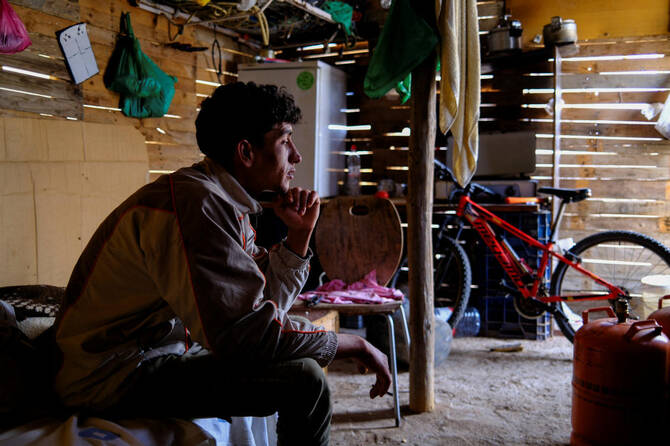
Among those seeking legal status is Abdelmoujoud Erra, a 27-year-old Moroccan migrant who has spent seven years in Spain working irregular jobs in the greenhouse-dominated province of Almería. He said legal documentation would provide access to formal employment, better wages and greater stability after years of living in informal settlements and relying on day labor.
Almería, home to more than 30,000 hectares of intensive greenhouse cultivation, is the European Union’s largest winter supplier of vegetables such as tomatoes and cucumbers. The sector exports produce worth around 3 billion euros annually and employs roughly 80,000 workers, according to unions and local authorities.
Industry representatives and labor groups say the regularization program could help address persistent labor shortages while bringing greater stability to a workforce that includes large numbers of undocumented migrants.
Andrés Góngora, coordinator of farmers’ union COAG, said the measure could strengthen workforce availability and support agricultural production by allowing employers to hire workers through formal channels. He added that a larger and more secure labor pool could encourage cultivation of more labor-intensive crops and improve social integration.
Humanitarian organizations have long raised concerns about living and working conditions in the region. Charities estimate that around 10,000 migrants reside in substandard settlements around Almería and that a significant share of agricultural laborers lack legal documentation.
The initiative has become a flashpoint in Spanish politics. The opposition People’s Party argues that large-scale regularization could place additional pressure on public services, while the far-right Vox party has accused the government of using migration to reshape the country’s demographic makeup.
Spain’s population has expanded in recent years, largely driven by immigration. According to estimates from think tank Funcas, approximately 840,000 undocumented migrants currently participate in the labor force.
For many workers, the policy represents a chance to secure legal employment and improve living conditions. Michael Aymaga, a 35-year-old migrant from Ghana living in a settlement near Nijar with limited access to utilities, said obtaining legal status would allow him to contribute more fully to Spanish society and pursue long-term opportunities.