Hidden Disorder, Lasting Impact: Women With PMDD Push for Recognition, Treatment and Research
“Too many doctors, myself included, don’t have the knowledge to help women who suffer in silence.”
A growing number of women, healthcare professionals and advocates are calling for greater awareness and research into Premenstrual Dysphoric Disorder (PMDD), a severe hormone-related condition that can have profound effects on mental health, family relationships and quality of life but remains widely underdiagnosed and poorly understood.
Current research indicates that PMDD affects up to one in 20 women of reproductive age. Despite its prevalence, only about 1.6% of affected individuals receive a formal diagnosis. The consequences can be severe. Research cited in the source material indicates that approximately one-third of those diagnosed with PMDD have attempted suicide, underscoring the condition’s significant mental health burden.
PMDD is characterized by severe emotional, psychological and physical symptoms that occur during the luteal phase of the menstrual cycle, typically in the days before menstruation. However, many patients report years of confusion, misdiagnosis and ineffective treatment before receiving appropriate care.
Limited awareness within the medical community has contributed to delayed diagnosis and treatment, according to patients and healthcare professionals interviewed about their experiences. The condition remains unfamiliar to many clinicians despite its potentially debilitating effects.
The lack of understanding extends beyond clinical diagnosis. Relatively little is known about how PMDD affects family dynamics, particularly relationships between mothers and their children. In response to these gaps, the United Kingdom has recently seen the establishment of its first charity dedicated exclusively to supporting individuals with PMDD and their families.
For families living with the condition, the impact can extend far beyond the individual experiencing symptoms.Daly, now 37, recalls growing up in a household affected by her mother’s undiagnosed PMDD. She remembers frequent and intense arguments between her parents before treatment became available.
“I’d feel sad because she’d be crying – I hated seeing her so upset,” Daly said.Reflecting on her childhood, Daly described periods when her mother’s behavior was difficult to understand.“Mum was hard work at points. I’d sometimes overhear her shouting at Dad and think, this is unfair,” she said.
For many women diagnosed later in life, understanding the source of recurring emotional distress can bring both relief and regret. Barker, another woman living with PMDD, described years of struggling with symptoms that affected her relationships and self-perception.“I’d say nasty things, and felt unable to stop, then afterwards think: that was awful,” Barker said.
She described a recurring cycle in which episodes of anger and emotional instability were followed by periods of remorse, depression and repeated apologies.“Then the tears and depression came, I’d spend a week apologising – then it’d start all over,” she said.
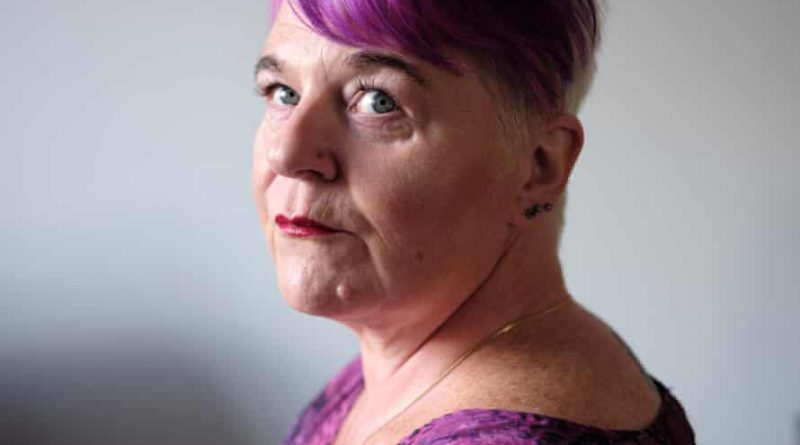
Barker’s experience also highlights the connection between PMDD and serious mental health challenges. Visible reminders of that period remain part of her daily life.
Tattoos now cover self-harm scars from some of the most difficult years of her illness.A significant turning point came when consultant gynecologist Professor John Studd introduced her to treatment involving oestrogen implants. According to Barker, the results were immediate and transformative.“It was the only thing that worked – my symptoms disappeared,” she said.
However, access to treatment proved challenging. Barker said the National Health Service declined to fund the therapy because PMDD was classified as a syndrome rather than a disease, affecting eligibility for coverage.Determined to continue treatment, she contacted physicians, elected officials and healthcare providers while relocating from Hampshire to Edinburgh.
The process ultimately required substantial personal financial investment.“I ended up paying £600 every six months to travel to London and get a new implant fitted at my own expense,” Barker said.Despite the costs, she described the treatment as indispensable.“Life on the oestrogen implant was heaven,” she said.
At one point, Barker said her daughter loaned her £1,000 to help finance continued treatment after her own financial resources became strained.Even after finding an effective medical intervention, Barker said she remained concerned about the effect PMDD had already had on her children.
“I worried I’d ruined my relationship with my kids,” she said.She believes receiving treatment before her children reached adolescence helped prevent further difficulties, but she remains conscious of the years lost to managing symptoms.“I was lucky to get treatment before their teens.
But as younger kids, they grew up around me, not with me,” she said. “I was on the outside looking in, trying to manage and hide my symptoms. They bore the brunt.”According to Barker, successful treatment allowed her to reconnect emotionally with her family in ways that had previously been difficult.She said it enabled her “to feel the love and joy from spending time with the kids which PMDD had stolen.”The lack of awareness surrounding PMDD is not limited to patients.
Healthcare professionals themselves can experience the condition without recognizing it.Dr. Milli Raizada, a general practitioner and specialist in women’s health, said she had never heard of PMDD before being diagnosed with it six years ago, despite years of medical training and clinical experience.Now 40, Raizada said the diagnosis exposed significant shortcomings in professional education regarding women’s health conditions.
She described feeling disappointed that a condition affecting so many women remained largely absent from medical training.“Too many doctors, myself included, don’t have the knowledge to help women who suffer in silence,” she said.Raizada argues that improvements in medical education and research are essential if diagnosis and treatment rates are to improve.“Better training. More research.
Stop sidelining women’s health,” she said.Her own symptoms emerged after discontinuing oral contraceptive medication. According to Raizada, changes became apparent during the luteal phase of her menstrual cycle, when emotional and psychological symptoms intensified.“In the luteal phase, I’d be arguing lots with him and he said, ‘This isn’t normal’,” she said, referring to observations made by her husband.
Raizada described a sharp contrast between her usual personality and the symptoms she experienced during affected periods.“I’m usually resilient and a multitasker but I suddenly had impostor syndrome, felt overwhelmed and worthless, and was hypersensitive and apathetic for two weeks of the month,” she said.
The turning point came after an unusually intense reaction to a routine family interaction.“After flying off the handle at my mother-in-law over a throwaway comment, I knew it was time to act,” Raizada said.For advocates and patients, such experiences illustrate the urgent need for greater recognition of PMDD within healthcare systems.
Despite affecting millions of women globally, the condition continues to be characterized by delayed diagnoses, inconsistent treatment access and limited research, leaving many patients to navigate years of symptoms before obtaining effective care.