Delhi’s Extreme Heat Exposes Risks Facing Thousands Living on the Streets
“Even when your eyes close, your mind stays awake. I need to be always protective of myself and my child.”
As temperatures across India’s capital continue to climb during another summer of extreme heat, the impact is being felt most acutely by those with little protection from the elements. For the hundreds of thousands of people living on Delhi’s streets, daily life unfolds under relentless heat, limited access to essential services and constant uncertainty about safety and survival.
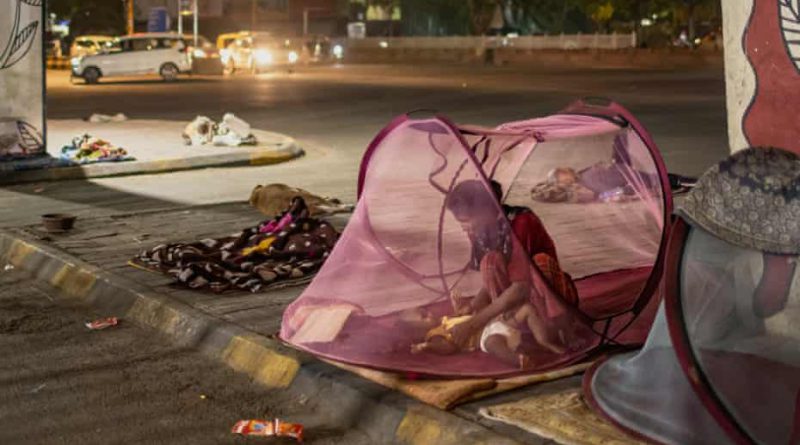
Among them is Shahida, a 20-year-old mother who lives with her family beneath a flyover in Delhi. Their home consists of a section of pavement where they sleep under mosquito nets and store their belongings. Throughout the day and night, they remain exposed to conditions that climate experts say are becoming increasingly dangerous as heatwaves intensify across the region.
Delhi has been experiencing sustained high temperatures, with daytime readings regularly reaching 43 degrees Celsius. Nighttime temperatures have also remained unusually elevated, providing little relief after sunset. According to reported meteorological data, the city recently recorded its warmest May night in nearly 14 years.As authorities issue repeated heat alerts and many residents seek refuge indoors, an estimated 300,000 people living without permanent shelter continue to face direct exposure to extreme temperatures.
Their vulnerability extends beyond heat alone, encompassing challenges related to food security, drinking water, sanitation and healthcare access.Climate researchers say homelessness significantly increases the risks associated with extreme weather.
Chandni Singh, a lead author with the Intergovernmental Panel on Climate Change, noted that people without stable housing often lack reliable access to basic resources required to cope with prolonged periods of heat.“Beyond exposure alone, homelessness is often accompanied by unreliable access to food, water and healthcare all of which are essential to cope with and adapt to extreme heat,” Singh said.
The consequences can be severe. According to a report by the Centre for Holistic Development, at least 192 homeless individuals died during a nine-day period of extreme heat in Delhi last summer. The deaths highlighted the disproportionate burden borne by vulnerable populations during heatwave conditions.
For Shahida, summer brings anxiety long before temperatures reach their highest levels. Having spent most of her life living in similar circumstances, she said the arrival of hotter months is accompanied by concerns about health, safety and the wellbeing of her young daughter, Jannat.Throughout the day, the family must manage basic needs while exposed to intense heat.
Access to cold drinking water is limited. They rely in part on a nearby public institution that permits them to fill containers during evening hours, allowing them to store water for later use. The supply, however, remains constrained and dependent on availability.The challenge of securing shelter is equally significant.
According to Indu Prakash Singh, a member of a state-level shelter monitoring committee established by India’s Supreme Court, Delhi faces a substantial shortage of accommodation for homeless residents. He estimates that the city’s shelter capacity falls short of demand by approximately 75%, leaving many families with few alternatives to sleeping outdoors.
Although a women’s night shelter operates less than 200 metres from where Shahida’s family sleeps, she said conditions inside often provide little respite from the heat.“It is even hotter inside than outside,” she said.The concern is echoed by shelter advocates. Singh said many facilities consist of portable cabin-style structures that absorb and retain heat during summer months.
In some locations, cooling systems are insufficient or non-functional, reducing their effectiveness during periods of extreme weather.Conditions inside shelters can also become crowded, particularly during heatwaves when more people seek relief. Reports from facilities in Delhi indicate that access to cooling equipment is often limited, leading to competition among residents for the coolest spaces.As evening approaches and temperatures begin to decline slightly, daily routines continue beneath the flyover.
Families prepare simple meals, organize belongings and make arrangements for the night. Shahida’s family reheats rice and curry cooked earlier in the day before setting up sleeping mats on the pavement.The reduction in temperature after sunset offers only partial relief.
Even at night, the heat remains significant, and concerns about security persist. Women living on the streets frequently report remaining alert long after lying down to sleep, aware of potential risks to themselves and their children.Shahida said rest is often difficult to achieve despite physical exhaustion. The combination of environmental stress, uncertainty and responsibility for a young child creates a constant state of vigilance.
“Even when your eyes close, your mind stays awake. I need to be always protective of myself and my child,” she said.Around her, other families settle in for the night under mosquito nets and makeshift shelters. Some fan children in the humid air while others arrange possessions in an effort to create a small sense of privacy amid the traffic and noise of the city.
Experts increasingly view such experiences as evidence of the broader social consequences of climate change. Rising temperatures, more frequent heatwaves and warmer nights are expected to place additional strain on urban populations, particularly those lacking adequate housing and access to public services.For homeless residents, adaptation options remain limited.
Without permanent shelter, air conditioning or reliable access to cooling infrastructure, exposure to dangerous temperatures becomes an unavoidable feature of daily life.As traffic continues to flow above and around the flyover where she lives, Shahida said her focus remains on caring for her daughter and enduring each day as it comes.
Looking at the child sleeping beneath a mosquito net on the pavement, she described Jannat as the source of her determination to keep going despite the hardships of life on the streets.“Maybe she is the only hope I still hold on to,” Shahida said. “Otherwise, I don’t know what is left.”