
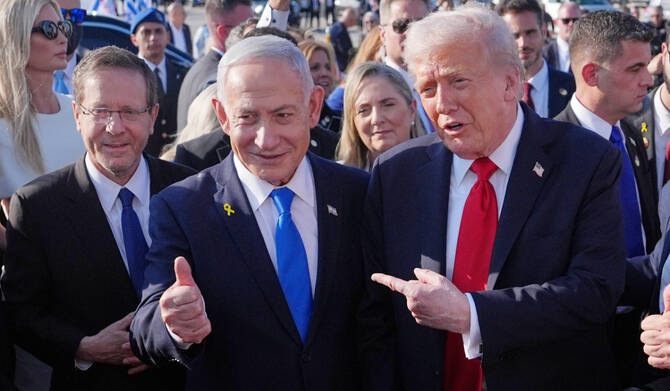
Netanyahu tests Trump alliance as Israel’s Iran strikes rattle ceasefire
Jeruslame-Iraeli Prime Minister Benjamin Netanyahu’s decision to authorize strikes linked to escalating tensions with Iran has exposed potential strains in his relationship with U.S. President Donald Trump, as Washington seeks to preserve a fragile regional ceasefire while Israel insists on retaining freedom of military action.
The latest exchange between Israel and Iran marked the first direct confrontation since a ceasefire took effect in April, raising concerns about a broader return to conflict across the Middle East.The escalation followed Israeli strikes on Beirut’s southern suburbs. Iran responded with missile launches toward Israel, prompting calls from some Israeli officials for a forceful counterstrike.
National Security Minister Itamar Ben Gvir urged a severe response, declaring that Tehran should face immediate consequences following the missile attacks.Netanyahu defended Israel’s position by reiterating the country’s right to self-defense, arguing that no sovereign state could be expected to refrain from responding when civilian population centers are targeted by ballistic missiles.
Analysts said the Israeli response reflected both security considerations and domestic political pressures. Adi Bershadsky, a retired Israeli colonel and defense specialist, said it would have been difficult for any Israeli government to leave such an attack unanswered. He also suggested there may have been some level of understanding regarding how the confrontation would unfold.
The Israeli military said its chief of staff remained in close contact with his U.S. counterpart, signaling ongoing military coordination despite apparent differences in political priorities.Yaakov Katz of the Jewish People Policy Institute said Israel’s actions conveyed a message that while Trump may favor diplomatic arrangements with Iran, Israel retains the ability to act independently when it views its security interests as threatened.
Political considerations may also have influenced decision-making in Jerusalem. Israel is scheduled to hold national elections by the end of October, and analysts noted that Netanyahu’s political opponents could have criticized any perceived failure to respond to Iranian missile attacks.Michael Horowitz, a regional analyst, said no Israeli leader would likely have accepted a situation in which an Iranian strike went unanswered.
He described Netanyahu’s decision to proceed despite Washington’s preference for de-escalation as a political gamble.According to Horowitz, the move represented one of the most public instances in which Netanyahu appeared willing to diverge from Trump’s approach, even as both leaders remain closely linked through their joint military and strategic policies toward Iran.
The relationship carries political significance for both men. Since launching a coordinated offensive against Iran on February 28, the United States and Israel have shared responsibility for managing the fallout from the conflict while balancing domestic political pressures ahead of upcoming elections in both countries.
Anna Barsky, a commentator for Israeli newspaper Maariv, said the Israeli response carried risks because it could encourage additional Iranian attacks or trigger involvement from allied armed groups in the region. However, she argued that failing to respond to a direct missile strike would have established a precedent that many Israeli policymakers considered unacceptable.
Although both Iranian and Israeli leaders have signaled a desire to limit further escalation, tensions remain elevated. Israel has continued military operations in Lebanon despite warnings from Tehran that further attacks could provoke a stronger reaction.
The latest developments underscore Israel’s longstanding strategic challenge of maintaining close cooperation with Washington while preserving the ability to act unilaterally on national security matters, particularly when U.S. and Israeli assessments of regional risks diverge.


