Ancient Indian Traveler Left His Name Across Egypt’s Royal Tombs, Revealing Forgotten Global Links
“These new inscriptions show the integration of people of Indian origin from all parts of the subcontinent into the society of Roman Egypt.” — Ingo Strauch, University of Lausanne
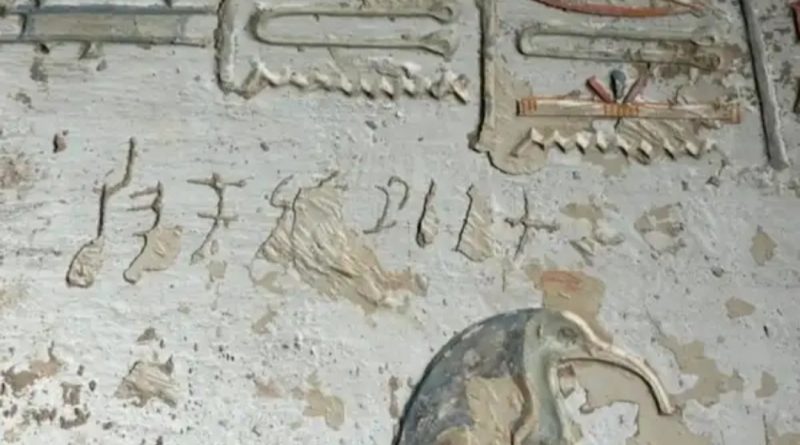
Nearly 2,000 years ago, an Indian traveler identified as Cikai Korran journeyed thousands of kilometers from the Indian subcontinent to Egypt and left his name inscribed across multiple royal tombs in the Valley of the Kings.
Researchers say the discovery of his inscriptions, along with nearly 30 others written in South Asian languages, is providing new evidence of the extent to which ancient India was connected to the wider Mediterranean world during the Roman era.
The findings emerged after researchers identified inscriptions written in Old Tamil, Sanskrit, Prakrit and Gandhari-Kharosthi inside six tombs in Egypt’s Valley of the Kings, one of the most significant archaeological sites of the ancient world.
The inscriptions date to between the first and third centuries CE and suggest that Indian travelers not only reached Egypt’s Red Sea ports but also ventured deep into the country’s interior.The discovery began in January 2024 when Ingo Strauch, a professor at the University of Lausanne in Switzerland, noticed markings on tomb walls that appeared different from the Greek and Latin graffiti long documented by scholars.
After photographing the inscriptions and examining them further, Strauch consulted Charlotte Schmid of the French School of Asian Studies in Paris. Schmid confirmed that some of the texts were written in Old Tamil.Together, the researchers documented nearly 30 inscriptions across six tombs.
Their findings were presented in February 2026 at the International Conference on Tamil Epigraphy in Chennai, adding a new chapter to the understanding of cultural and commercial exchanges between India and Egypt during the Roman period.
Among all the inscriptions discovered, those attributed to Cikai Korran have attracted particular attention. Researchers identified eight separate inscriptions bearing his name across five different tombs, making him the most prolific Indian visitor currently known from the site.
According to the researchers, Korran appeared determined to ensure his presence would be remembered. Several of his inscriptions were placed in highly visible but difficult-to-reach locations. One inscription inside the tomb of Ramesses IX was found approximately 16 to 20 feet above the entrance, raising questions about how he managed to access the location.
Schmid noted during the conference presentation that the placement of the inscription was unusual. The elevated position suggests a deliberate effort to make the inscription stand out from the hundreds of other marks left by visitors over centuries.Korran also inscribed his name at the entrances of the tombs of Tausret and Setnakhte.
Researchers found that his was the only known graffiti at those locations, leading to speculation that the tombs may still have been sealed or largely inaccessible when he visited.The inscriptions themselves were simple.
Researchers said they effectively stated that Cikai Korran had visited and seen the site, mirroring a practice common among Greek-speaking travelers who left similar messages throughout the Valley of the Kings. The similarity suggests Indian visitors were familiar with local customs and participated in shared cultural practices while traveling through Roman Egypt.
Another inscription identified by researchers belonged to a man named Indranandin, who described himself as a messenger of the Kshaharata dynasty, a ruling power in parts of western India during the first century CE. Researchers believe he may have traveled through the Egyptian port of Berenike before continuing inland and potentially onward toward Rome.
The inscriptions also provide evidence that some Indian travelers possessed significant linguistic and cultural knowledge. Researchers found examples where Indian-language inscriptions appeared to respond directly to nearby Greek texts. According to Schmid, the writers demonstrated awareness of a shared cultural environment and showed familiarity with multiple languages used across the eastern Mediterranean.
Such multilingual engagement suggests these travelers were more than transient merchants. Instead, they appear to have been active participants in the cosmopolitan society that developed around Roman Egypt’s trade networks, which connected Africa, the Mediterranean, Arabia and South Asia.Historians have long known that commercial links connected India and Egypt during the Roman era.
Egyptian ports on the Red Sea served as major gateways for trade between the Mediterranean world and the Indian Ocean. Previous discoveries of Indian inscriptions at Berenike and on the island of Socotra had already established the presence of South Asian merchants and travelers in the region.Archaeological evidence from Berenike has further reinforced those connections.
Studies have identified rice consumption, Indian ceramics, glass beads, textiles and botanical remains, indicating sustained interaction between communities from the Indian subcontinent and residents of Roman Egypt. Researchers have also documented earlier Tamil-Brahmi inscriptions at the port, demonstrating that Indian visitors were present centuries before the newly identified Valley of the Kings texts were recognized.
The significance of the latest discovery lies in its geographic reach. While previous evidence largely focused on ports and commercial centers, the Valley of the Kings inscriptions demonstrate that Indian travelers moved well beyond coastal settlements and visited some of Egypt’s most important cultural and religious landmarks.
Researchers say the inscriptions had technically been known for decades but remained unidentified. More than 2,000 Greek and Latin graffiti from the Valley of the Kings were cataloged by scholars after French researcher Jules Baillet documented them in 1926. However, specialists working on Egyptian archaeology rarely collaborated with experts in South Asian languages, allowing the Indian inscriptions to go unnoticed.
Egyptologist Steve Harvey said the texts were overlooked because researchers lacked the linguistic expertise needed to recognize them. While Greek and Aramaic inscriptions received considerable scholarly attention, the South Asian material remained largely unexamined.Strauch said the findings demonstrate that visitors from Tamil-speaking regions and other parts of India did more than arrive at Egyptian ports and depart again.
The evidence suggests they spent enough time in the country to travel considerable distances and visit sites of historical and cultural importance.The researchers believe the discovery may represent only a fraction of the Indian presence in ancient Egypt.
Strauch said the inscriptions reveal the integration of people from across the Indian subcontinent into Roman Egyptian society and increase the likelihood that additional Indian-language inscriptions and artifacts remain to be discovered elsewhere in the country.Alexandra von Lieven, professor of Egyptology at the University of Münster, said the texts indicate not only that Indians traveled to Egypt but that they also showed a genuine interest in Egyptian culture.
She suggested future investigations may uncover similar inscriptions at temples and other archaeological sites throughout the country.The collection of inscriptions left by Cikai Korran and other Indian travelers is reshaping scholarly understanding of ancient mobility, demonstrating that cultural exchange between South Asia and Egypt extended far beyond commerce and reached some of the most iconic monuments of the ancient world.