Modi Surpasses Nehru to Become India’s Longest-Serving Elected Prime Minister
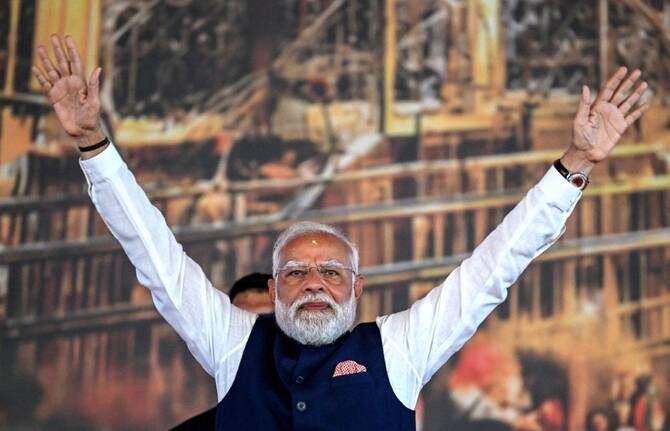
New Delhi-Indian Prime Minister Narendra Modi became the country’s longest-serving elected prime minister on Wednesday, surpassing the record set by India’s first premier, Jawaharlal Nehru, after completing 4,399 consecutive days in office.
The milestone comes nearly 12 years after Modi first took office on May 26, 2014. According to government figures, his uninterrupted tenure has now exceeded Nehru’s 4,398-day period as an elected prime minister, calculated from India’s first general election in 1952.
“Public service is the greatest measure of good governance,” Modi wrote on social media, adding that public trust is earned through humility, dedication and a sense of duty.
The achievement follows Modi’s return to power for a third consecutive term in 2024, making him only the second Indian leader after Nehru to secure three successive electoral mandates. His leadership has further entrenched the dominance of the Bharatiya Janata Party-led National Democratic Alliance in Indian politics.
During Modi’s tenure, India’s economy expanded to approximately $4.19 trillion, becoming the world’s fourth-largest economy by nominal gross domestic product and overtaking Japan. His government has also highlighted large-scale infrastructure expansion, welfare programs and trade agreements with partners including the United Kingdom, the United Arab Emirates and Oman.
Government officials credit Modi’s administration with major social development initiatives, including the construction of about 120 million household toilets, the provision of 157 million tap-water connections and the expansion of clean cooking gas access to more than 100 million beneficiaries.
Kanchan Gupta, a senior adviser at India’s Ministry of Information and Broadcasting, described the milestone as a reflection of Modi’s role in encouraging ambitious national development goals and delivering large-scale public welfare programs.
Analysts, however, note that Modi’s record in office has also attracted criticism. Journalist and author Nilanjan Mukhopadhyay said economic growth has coincided with concerns over widening wealth inequality and what critics describe as increasing concentration of economic power.
Mukhopadhyay also pointed to concerns raised by democracy watchdogs and political observers regarding the state of democratic institutions and growing political polarization during Modi’s years in office.
Modi has frequently faced criticism from opponents and rights groups over allegations that his Hindu nationalist agenda has weakened India’s secular traditions and contributed to rising religious polarization, particularly affecting the country’s Muslim minority. His supporters reject those accusations and argue that his policies have accelerated development, improved governance and expanded access to basic services.