Lebanon Aoun talks Lebanon’s Aoun Reaffirms Commitment to US-Brokered Talks With Israel
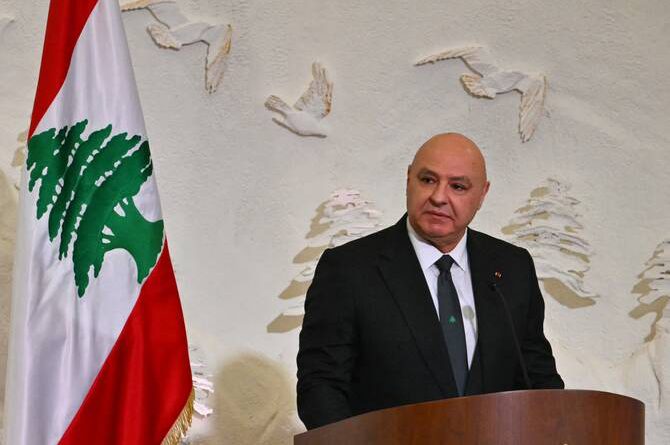
Dubai-Lebanese President Joseph Aoun reaffirmed on Thursday that Lebanon would remain engaged in U.S.-mediated negotiations aimed at ending hostilities with Israel, insisting that any lasting agreement must include an Israeli withdrawal from Lebanese territory, a halt to military attacks, the deployment of Lebanese state forces, the return of displaced civilians and the release of prisoners.
Speaking during a meeting with a delegation from the Culture and Freedom Foundation led by former justice minister Ibrahim Najjar, Aoun dismissed calls for Lebanon to abandon the negotiations and said the government would continue pursuing talks until a settlement serving Lebanon’s national interests is achieved.
“We will not withdraw and we will continue until we reach a conclusion that benefits our nation,” Aoun said, according to remarks released by the presidency.
The Lebanese leader emphasized the role of state institutions in preserving sovereignty and stability, arguing that national authority remains the foundation for addressing the country’s security and political challenges.
Aoun’s comments come amid ongoing diplomatic efforts to stabilize the Israel-Lebanon frontier following months of conflict that have displaced large numbers of civilians and caused extensive damage in southern Lebanon.
Earlier, in a televised interview, Aoun made a rare direct appeal to Israel to pursue a negotiated settlement, arguing that military action alone could not guarantee long-term security.
He said Lebanon’s approach remains aligned with the 2002 Arab Peace Initiative, under which Arab states offered normalization of relations with Israel in exchange for the establishment of a Palestinian state and Israel’s withdrawal from occupied territories.
Aoun stressed, however, that progress toward broader normalization would require a gradual process and confidence-building measures rather than immediate political breakthroughs.
Lebanon and Israel agreed last week to a new ceasefire arrangement backed by the United States, but tensions have persisted amid reports of continued violence and disagreements over implementation.
The conflict escalated on March 2 when Hezbollah launched attacks against Israel in support of Iran. Israel responded with an extensive air campaign and ground operations that resulted in the occupation of areas in southern Lebanon.
According to figures cited by Lebanese officials, more than 3,600 people have been killed in Israeli military operations in Lebanon, while over one million residents have been displaced by the fighting.
Aoun’s remarks underscore Lebanon’s effort to balance diplomatic engagement with demands for concrete security and territorial guarantees, as international mediators seek to prevent a broader regional escalation.