Engine Probe Stalls Air India Crash Verdict
Ahmedabad-Indian investigators are unlikely to issue a final report into the crash of an Air India Boeing 787 Dreamliner by the first anniversary of the accident on June 12, as analysis of the aircraft’s engines remains incomplete, according to a source familiar with the investigation.
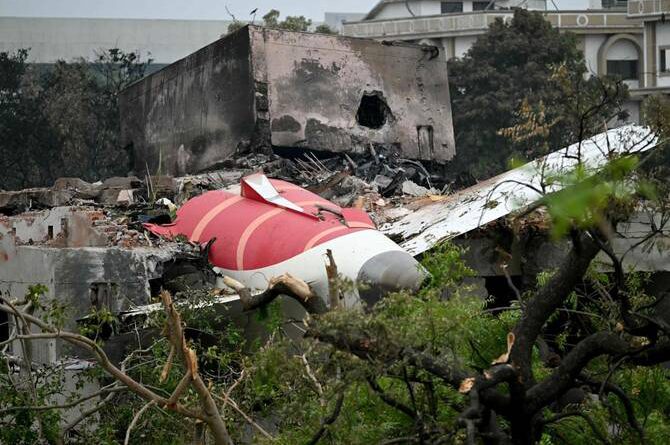
The Air India jet crashed shortly after takeoff from Ahmedabad on June 12, 2025, killing 260 people in the world’s deadliest aviation disaster in a decade. The aircraft was powered by engines manufactured by GE Aerospace, which have remained a central focus of the inquiry.
Investigators conducted engine tests in April and traveled to France last month as part of an examination of the aircraft’s engine management unit, the source said, speaking on condition of anonymity because the details have not been made public.
Bloomberg News reported earlier on Thursday that a final report could be released within three months after technical studies involving the engines, which were sent to the United States for examination, are completed.
Under international aviation rules, accident investigators are expected to publish a final report within one year of a crash. When an investigation remains unfinished, authorities typically issue an interim statement outlining progress made in the inquiry.
Reuters reported last month that Indian officials were preparing an interim report rather than a final determination ahead of the anniversary because of the complexity of the investigation.
India’s Aircraft Accident Investigation Bureau (AAIB), the civil aviation ministry, Air India, the U.S. National Transportation Safety Board, Boeing and GE Aerospace did not immediately respond to requests for comment.
A preliminary report released last year found that the aircraft’s engine fuel control switches moved almost simultaneously from the “RUN” position to “CUTOFF” shortly after takeoff, cutting fuel supply to both engines and leading to a loss of thrust.
The findings intensified scrutiny of cockpit actions in the moments before the crash. Reuters reported last year that an early assessment by U.S. officials, based in part on cockpit voice recorder dialogue, supported the possibility that the captain had cut fuel flow to the engines. The AAIB subsequently said it was too early to reach definitive conclusions.
The captain’s father later petitioned India’s Supreme Court for an independent investigation, arguing that potential causes beyond deliberate pilot action should be fully examined.
The Federation of Indian Pilots wrote on June 5 to the civil aviation minister, aviation regulator and the prime minister’s office urging investigators not to release an interim report without obtaining additional technical information from Boeing and Air India.
According to a letter reviewed by Reuters, the pilots’ body argued that further data were necessary to evaluate and challenge what it described as a pilot-suicide theory being explored during the investigation.
The preliminary report did not issue any safety recommendations to Boeing or GE Aerospace, indicating investigators had not identified technical deficiencies requiring immediate corrective action at that stage.
The accident marked the first fatal crash involving Boeing’s 787 Dreamliner since the aircraft entered commercial service in 2011.
The crash occurred during Air India’s ongoing restructuring following its privatization, a transformation that has faced challenges from supply-chain disruptions, the conflict involving Iran and airspace restrictions imposed by Pakistan on Indian carriers.