Ancient Stepwells Reemerge as India Confronts Deepening Water Stress
New Delhi-India is increasingly turning to centuries-old stepwells to address mounting water shortages, as conservation groups and local communities restore historic water-harvesting structures that once formed the backbone of urban and rural water systems across the country.
Stepwells, deep wells accessed by descending stairways, were widely used between the 11th and 18th centuries to store rainwater and provide year-round access to groundwater. Once common across large parts of India, many fell into disuse during British colonial rule and were gradually abandoned, buried or converted into dumping sites.
The revival effort has gained momentum as India faces growing water stress. According to World Bank data, around 600 million people in the country experience water shortages, while climate-related droughts have intensified pressure on already strained resources.
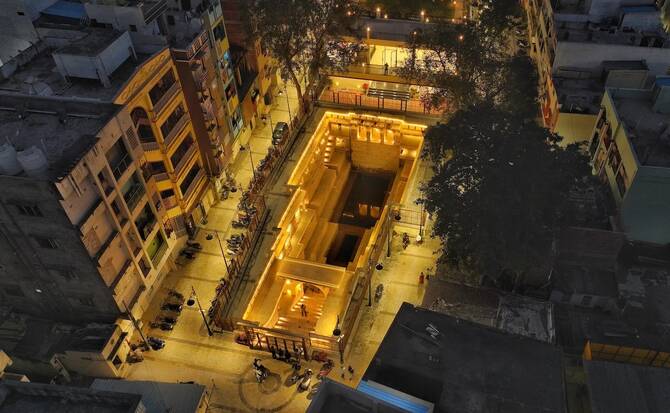
One of the most prominent restoration projects is the Bansilalpet stepwell in Secunderabad, in the southern state of Telangana. The 18th-century structure, originally built during the rule of the Asaf Jahi dynasty, had deteriorated into a waste disposal site before being restored in 2022 by the nonprofit Rainwater Project.
Kalpana Ramesh, an urban designer and founder of the organization, said the initiative sought to reconnect communities with traditional water systems while improving local environmental conditions. The restored site has since become a public gathering space and tourist attraction, drawing thousands of visitors each month.
Ramesh said the project demonstrates how existing heritage infrastructure could contribute to water security without requiring entirely new construction. Her organization has restored 30 stepwells across Telangana and is currently working on six additional sites.
The restoration model is also being adopted in other regions. In Maharashtra, another state facing recurring water stress, Pune-based nonprofit Sevavardhi has revived 26 stepwells since 2023, focusing on drought-prone districts.
Its first major project was completed in Jejuri, a pilgrimage town near Pune. According to Sevavardhi Chairwoman Girija Sirshikar, the restored stepwell now supplies substantial quantities of water during the dry months, helping local communities cope with seasonal shortages.
The organization plans to restore at least 100 stepwells over the next several years, combining water conservation objectives with the preservation of historical architecture.
Experts involved in the projects say stepwells offer multiple benefits beyond water storage. Their design allows rainwater to recharge underground aquifers naturally, while their shaded, below-ground structures can provide relief from extreme heat. Historically, they also served as important social and community spaces.
The renewed interest in stepwells reflects a broader search for sustainable water-management solutions as India grapples with rising temperatures, rapid urbanization and increasing demand for freshwater resources.
Conservationists argue that restoring existing stepwells could complement modern infrastructure projects, particularly in historic cities where many of the structures remain intact beneath decades of neglect.
As water scarcity becomes an increasingly pressing challenge across India, the revival of these medieval engineering systems is drawing attention as a practical and culturally significant tool for strengthening long-term water resilience.