Trump Warns of Renewed Strikes on Iran as Fragile Peace Talks Open in Switzerland
Buergenstock– U.S. President Donald Trump threatened fresh military action against Iran on Sunday as American and Iranian officials convened in Switzerland for the first negotiations under a recently signed peace framework, with the talks overshadowed by Tehran’s renewed closure of the Strait of Hormuz and continued fighting in Lebanon.
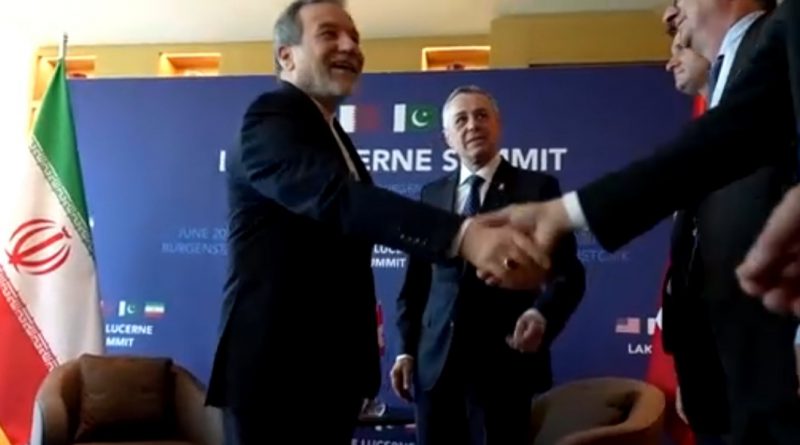
The meeting at the Swiss resort of Buergenstock brought together U.S. Vice President JD Vance, Iranian officials and mediators from Qatar and Pakistan in the first diplomatic engagement since Washington and Tehran agreed a memorandum of understanding aimed at ending months of regional conflict.
The accord, reached last week, calls for the reopening of the Strait of Hormuz and a halt to hostilities across the region, including in Lebanon, where Israeli forces have been fighting Hezbollah since March. Iran has accused Washington of failing to ensure implementation of those commitments and said substantive negotiations would not proceed until conditions on the ground improve.
“Iran must immediately stop their highly paid PROXIES in Lebanon from causing trouble. If they don’t, we’ll hit Iran very hard again, just like we did last week, only harder!!!” Trump said in a statement, signaling the possibility of renewed military escalation despite ongoing diplomatic efforts.
Iranian officials responded by narrowing the scope of Sunday’s discussions. Foreign Ministry spokesperson Esmail Baghaei said the talks would focus only on implementation of the memorandum rather than broader issues such as Iran’s nuclear program, arguing that commitments related to Lebanon had not been fulfilled.
Baghaei said Tehran’s decision to close the Strait of Hormuz again stemmed from continued Israeli military operations in Lebanon despite a ceasefire announced on Friday. Iran’s Fars news agency cited a military source as saying no new permits were being issued for ships seeking to transit the strategic waterway.
The move has renewed concerns over global energy supplies. The strait serves as one of the world’s most important oil shipping routes, and its earlier closure during the conflict caused major disruptions to international energy markets.
U.S. officials questioned Iran’s assertion that the waterway had been fully closed. However, shipping data indicated a sharp decline in vessel movements following Tehran’s announcement, with significantly fewer tankers reported transiting the passage compared with recent days.
At the talks, Vance sought to project optimism, saying progress had been made toward reducing violence in Lebanon despite continuing instability.
“These things are always a little bit messy,” he told reporters.
Earlier on Sunday, Vance, special envoy Steve Witkoff and Jared Kushner met Pakistani Prime Minister Shehbaz Sharif and Pakistan’s Army Chief Field Marshal Asim Munir on the sidelines of the negotiations. The meeting featured cordial exchanges among the participants as diplomatic efforts continued to secure broader regional stability.
Under the memorandum, Washington and Tehran are expected to hold 60 days of negotiations covering Iran’s nuclear activities, sanctions relief and economic measures. Iran has said initial economic benefits, including sanctions waivers and access to frozen assets, must be delivered before more substantive commitments can be discussed.
Iranian President Masoud Pezeshkian expressed confidence that negotiations could support economic recovery and said initial progress had already enabled Tehran to regain access to part of its financial resources.
Despite diplomatic engagement, conditions in Lebanon remain fragile. Lebanese authorities reported 20 deaths from Israeli strikes on Saturday, while military teams continued clearing unexploded ordnance from southern towns. Reuters journalists observed residents returning to parts of southern Lebanon on Sunday, suggesting a tentative improvement in security conditions despite the absence of a durable ceasefire.
The negotiations represent the most significant direct diplomatic engagement between Washington and Tehran since the outbreak of hostilities earlier this year, but sharp disagreements over Lebanon and maritime access underscore the challenges facing efforts to secure a lasting regional settlement.