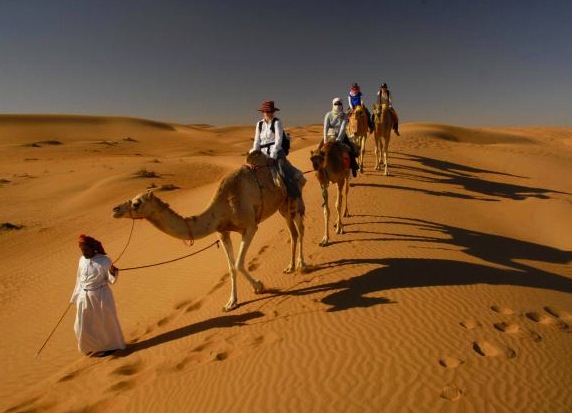
Price of Heritage: The Cultural and Economic Power of Camels in Saudi Arabia
Riyadh – In Saudi Arabia, few symbols carry as much emotional, cultural, and economic weight as the camel.
For centuries, these remarkable animals have shaped the Kingdom’s identity, becoming treasured companions and valuable assets across generations.
Revered as the ships of the desert, camels have long been admired for their resilience and their deep roots in Arabian history.
Many owners describe caring for camels as a source of peace, a refuge from the demands of modern life and a link to ancestral traditions.
Camel owners across the Kingdom often speak of their emotional attachment to the animals, viewing them not only as investments but as part of their heritage.
Many Saudis find comfort in spending time with their camels, seeing them as symbols of simplicity, patience, and strength.
Religious significance further elevates the status of camels in Saudi culture, with many references to them found in Islamic tradition.
Their mention in sacred texts strengthens their spiritual value and reinforces the belief that camels hold a unique place among animals.
Scientific studies support these beliefs, highlighting the nutritional and medicinal benefits of camel milk.
Research shows its positive effects on the liver, kidneys, and overall health, giving modern validation to historical practices.
Camels also possess remarkable biological traits that allow them to thrive in harsh desert climates.
With no gallbladder and the ability to withstand extreme thirst and heat, they demonstrate unique endurance unmatched by most animals.
Experts note that camels can travel for hours, covering long distances and carrying heavy loads even in high temperatures.
These abilities helped them become indispensable to Bedouin life, supporting trade routes and daily survival across the Arabian Peninsula.
Historically, camel trading was a major economic activity, connecting Saudi traders to markets in Iraq, the Levant, Palestine, and Egypt.
Caravans traveled for months, carrying hundreds of camels to distant regions and returning with fabrics, food, and essential goods.
This rich tradition remains alive today, with camel markets thriving across the Kingdom and attracting buyers from across the region.
Prices vary widely, with top-quality camels selling for more than SR1 million and even young calves fetching impressive sums.
Despite challenges such as drought and desertification, Saudi commitment to preserving camel heritage has remained strong.
Government initiatives and public support have helped maintain breeding practices, festivals, and national markets that honor this legacy.
One of the most celebrated platforms for camel culture is the annual King Abdulaziz Camel Festival, now a major global attraction.
The event blends heritage, sports, beauty competitions, and economic activity, drawing participants and visitors from inside and outside the Kingdom.
The festival also serves as a cultural bridge, showcasing the deep pride Saudis hold for their camels.
Beauty competitions, racing events, and exhibitions highlight the elegance, strength, and diversity of different camel breeds.
Camel owners often say that their animals are too precious to sell, despite the high prices they command.
Emotional value often outweighs financial offers, reinforcing the belief that camels represent memory, lineage, and honor.
Leaders, enthusiasts, and local communities continue to support and elevate camel culture across Saudi Arabia
Many individuals have devoted their lives and resources to preserving camel traditions, ensuring that younger generations remain connected to this heritage.
Acts of generosity and support have shaped the modern camel industry, helping owners sustain their herds during difficult times.
These efforts reflect a wider national appreciation for camels as symbols of endurance, history, and unity.
Today, camels remain a point of pride, value, and identity for Saudis, carrying stories of ancient journeys and modern achievements.
Their presence continues to shape cultural celebrations, economic practices, and national traditions that define life in the Kingdom.
As Saudi Arabia embraces the future, camels stand as timeless guardians of heritage, bridging old landscapes with new horizons.
Their legacy continues to inspire, reminding the nation of the beauty, resilience, and richness of its roots.