Strengthening Gulf Unity: Saudi Deputy Foreign Minister Meets Qatar’s Minister in Doha
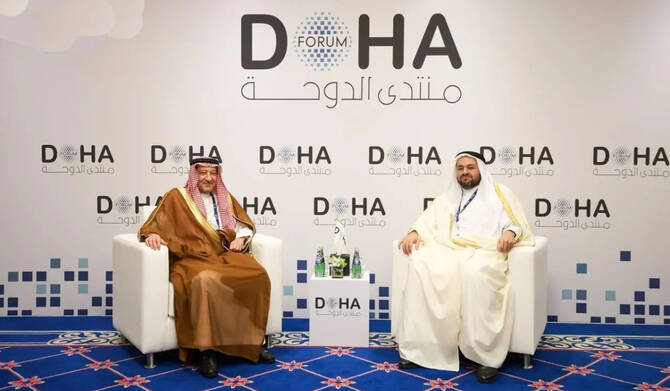
Doha – A renewed spirit of cooperation defined the recent meeting between Saudi Arabia’s Vice Minister of Foreign Affairs Waleed Elkhereiji and Qatar’s Minister of State for Foreign Affairs Mohammed bin Abdulaziz Al-Khulaifi.
The discussion, held on the sidelines of the Doha Forum, emphasized the growing momentum behind Gulf coordination and strategic partnership.
The meeting reflected a shared commitment to building stronger diplomatic ties and expanding collaboration across a wide range of sectors.
Both officials highlighted the importance of deepening bilateral relations to support regional stability, prosperity, and long-term development goals.
Saudi Arabia and Qatar continue to move forward with a unified vision that aligns political dialogue with economic and social progress.
Their engagement at the Doha Forum reaffirmed a mutual interest in elevating cooperation to address evolving global challenges.
The discussions touched on multiple areas where joint efforts can bring meaningful results for both countries.
Energy, investment, climate issues, and regional diplomacy were among the important fields identified for stronger coordination.
Both sides expressed appreciation for the steady progress achieved in bilateral relations in recent years.
They emphasized the value of maintaining open communication to support policy alignment and shared decision-making.
The meeting also showcased the increasing diplomatic activity within the Gulf region as countries pursue integrated approaches to development.
Saudi Arabia and Qatar, as influential regional players, are expanding their roles in international forums and global dialogue.
Their cooperation reflects a broader GCC commitment to unity, economic diversification, and collective security.
This spirit of collaboration is becoming essential as the region adapts to shifting geopolitical dynamics and new global priorities.
The presence of the Saudi ambassador to Qatar added significance to the meeting, demonstrating the strength of diplomatic representation between the two countries.
Such high-level engagement underscores the importance both sides place on maintaining constructive relations.
Both ministers reiterated the value of enhancing cooperation in fields such as trade, investment, education, and innovation.
They also explored potential partnerships that support youth empowerment, cultural exchange, and sustainable development.
The meeting highlighted a shared belief that bilateral cooperation can serve as a foundation for broader regional stability.
By strengthening ties, Saudi Arabia and Qatar aim to promote peace, economic opportunity, and long-term resilience throughout the Gulf.
Diplomatic engagement between Riyadh and Doha has witnessed steady growth, supported by ongoing communication and mutual respect.
Their commitment to collaboration demonstrates a forward-looking approach rooted in trust and strategic partnership.
The dialogue at the Doha Forum also emphasized the importance of regional platforms in shaping international cooperation.
Through these platforms, Gulf states continue to present unified positions on global issues ranging from energy transition to humanitarian diplomacy.
Both sides acknowledged the importance of developing future-focused strategies to address climate challenges and global economic shifts.
Shared initiatives in renewable energy, sustainability, and digital transformation were highlighted as key areas for upcoming collaboration.
Strengthening Gulf diplomatic ties not only supports national interests but also enhances the region’s collective voice in global forums.
With Saudi Arabia and Qatar working closely together, the Gulf is positioned to play a larger and more influential role on the world stage.
The optimism reflected in the meeting signals strengthening bonds and encourages continued diplomatic engagement.
Both countries appear committed to ensuring that cooperation remains a pillar of Gulf unity and regional progress.
As Saudi Arabia and Qatar deepen their partnership, the long-term future of the region becomes more interconnected and resilient.
Their shared vision promises stability, opportunity, and collaboration across generations.