Japan PM Reassures Markets With Disciplined, Growth-Focused Budget Strategy
Fiscal balance, investor confidence, and long-term stability anchor Japan’s 2026 outlook.
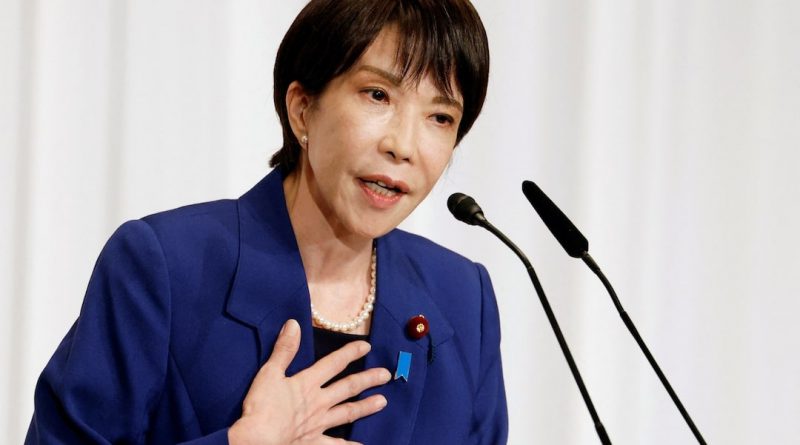
Japan’s Prime Minister Sanae Takaichi has moved decisively to reassure financial markets by outlining a draft budget that combines ambitious economic support with clear fiscal discipline.
Her message comes at a time when investors are closely watching Japan’s public finances amid global volatility, rising interest rates, and heightened sensitivity to sovereign debt trends.
The proposed budget for the fiscal year beginning in April reflects a careful effort to support households and businesses while keeping government borrowing firmly under control.
Despite its headline size, the plan signals continuity and credibility rather than unchecked expansion, reinforcing confidence in Japan’s economic stewardship.
Total spending is projected at 122.3 trillion yen, reflecting both structural commitments and targeted measures designed to strengthen resilience against rising living costs.
Importantly for markets, new government bond issuance will be capped at 29.6 trillion yen, remaining below the 30 trillion yen threshold for a second consecutive year.
This restraint sends a strong signal that Japan intends to fund growth responsibly rather than relying excessively on debt markets.
The debt dependence ratio is set to fall to 24.2 percent, marking the lowest level since the late 1990s and underscoring a clear shift toward sustainability.
Such figures directly address concerns that fiscal expansion could destabilize bond markets or place renewed pressure on the yen.
Prime Minister Takaichi emphasized that fiscal responsibility and economic strength are not competing goals but complementary priorities.
She described the budget as striking a balance between supporting growth and safeguarding long-term fiscal health.
This framing is likely to resonate with both domestic stakeholders and international investors seeking predictability from the world’s third-largest economy.
The budget also builds on a previously announced stimulus package focused on easing the burden of higher prices on households.
Rather than broad-based spending, the government has stressed targeted, strategic allocations with measurable economic returns.
In speeches to business leaders, Takaichi highlighted a long-term perspective that prioritizes productivity, competitiveness, and sustainable growth.
She made clear that responsible fiscal policy does not mean indiscriminate expansion, but rather disciplined investment aligned with national priorities.
Market analysts note that this approach could help calm recent volatility in long-dated government bonds.
By clearly signaling limits on borrowing, the government reduces uncertainty around future issuance and debt servicing costs.
Private-sector economists have suggested that maintaining this measured stance will be key to sustaining investor confidence.
They also point out that continued transparency around fiscal targets could further stabilize expectations.
The government’s economic advisory panels have echoed the importance of clearly communicating a path toward reducing the debt-to-GDP ratio.
Such guidance reinforces the narrative that Japan’s reflationary efforts are evolving into a more balanced and mature policy framework.
For global investors, Japan’s message is one of continuity rather than disruption.
The country remains committed to supporting growth, but not at the expense of fiscal credibility built over recent years.
This reassurance is particularly important as major economies navigate tightening financial conditions and shifting capital flows.
Japan’s disciplined stance may also help differentiate its markets as relatively stable amid global uncertainty.
The draft budget will be finalized and submitted to parliament in early 2026, offering further clarity in the months ahead.
If implemented as outlined, it could strengthen confidence in Japan’s ability to manage both near-term challenges and long-term structural pressures.
Ultimately, the budget reflects an effort to align political priorities, economic support, and market expectations.
By emphasizing balance and sustainability, Japan’s leadership is positioning the economy for steady growth without sacrificing fiscal trust.