Saudi Arabia ranks second globally in humanitarian aid
Riyadh – Saudi Arabia has emerged as one of the world’s leading humanitarian donors, ranking second globally and first in the Arab world for humanitarian aid contributions in 2025, according to data from the United Nations Financial Tracking Service.
The Kingdom’s humanitarian footprint has been particularly strong in conflict-affected regions, with Yemen receiving the largest share of its assistance, accounting for 49.3 percent of total aid, while Saudi Arabia also ranked second in overall contributions to the Syrian Arab Republic.
This global ranking reflects Saudi Arabia’s sustained commitment to international relief efforts during a period marked by prolonged conflicts, humanitarian crises, and rising needs across multiple regions.
The scale and consistency of Saudi assistance have positioned the Kingdom among the most influential donor nations worldwide, reinforcing its role as a key supporter of vulnerable populations.
In addition to its 2025 humanitarian performance, a recently released 2024 report on developmental assistance highlighted Saudi Arabia’s broader contributions to global aid.
The Kingdom ranked second among 16 non-member donor countries and secured the 10th position globally in terms of total aid volume among 48 donor countries, including both members and non-members.
This demonstrates that Saudi Arabia’s engagement extends beyond emergency relief to long-term development and reconstruction initiatives.
Dr. Abdullah Al-Rabeeah, supervisor-general of the Saudi humanitarian aid agency KSrelief, underscored that these achievements are rooted in the Kingdom’s values of generosity and its emphasis on preserving human dignity.
He noted that Saudi Arabia’s humanitarian leadership is not driven solely by statistics but by a long-standing moral commitment to supporting communities affected by war, poverty, and natural disasters.
Saudi Arabia’s aid efforts are implemented through a structured and transparent system, with all contributions documented in real time on the Saudi aid platform, recognized as the largest humanitarian aid platform in the region.
This transparency allows international organizations, partners, and the public to track the scope and impact of Saudi-funded projects across different countries and sectors.
The Kingdom’s humanitarian strategy has benefited from strong institutional backing and clear policy direction, supported by King Salman and Crown Prince Mohammed bin Salman.
Their continued support has played a critical role in strengthening Saudi Arabia’s international humanitarian standing and ensuring that aid delivery remains efficient, targeted, and impactful.
Yemen has remained a central focus of Saudi humanitarian efforts due to the scale of the ongoing crisis and its direct regional implications.
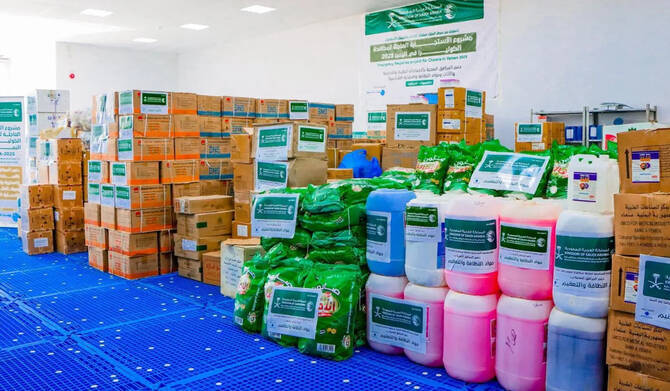
Saudi-funded projects in Yemen have covered food security, healthcare, shelter, water, and sanitation, aiming to address both immediate needs and longer-term stability.
The Kingdom’s leading share of aid to Yemen highlights its commitment to alleviating suffering in one of the world’s most severe humanitarian emergencies.
Similarly, Saudi Arabia’s position as the second-largest donor to humanitarian efforts in the Syrian Arab Republic reflects its engagement in addressing displacement, health challenges, and basic service shortages caused by years of conflict.
These contributions have supported millions of affected civilians and reinforced Saudi Arabia’s role in regional humanitarian response mechanisms.
Dr. Al-Rabeeah emphasized that Saudi Arabia continues to act as a constant source of generosity and a symbol of goodwill on the global stage.
He stated that the Kingdom remains firmly committed to extending help wherever it is needed, regardless of geography, politics, or cultural differences, reinforcing its image as a reliable and principled humanitarian partner.
As global humanitarian needs continue to rise, Saudi Arabia’s ranking and sustained contributions signal its intention to remain at the forefront of international aid efforts.
The Kingdom’s approach combines financial strength, institutional capacity, and ethical responsibility, positioning it as a major force in shaping the future of humanitarian assistance worldwide.