U.S. questions Iran leader’s fitness after war injuries as strikes intensify
Washington_ Pete Hegseth said on Friday that Iran’s new supreme leader, Mojtaba Khamenei, has been wounded and is likely disfigured following nearly two weeks of U.S. and Israeli strikes on Iran, raising questions about his ability to govern as Washington escalates military pressure on Tehran.
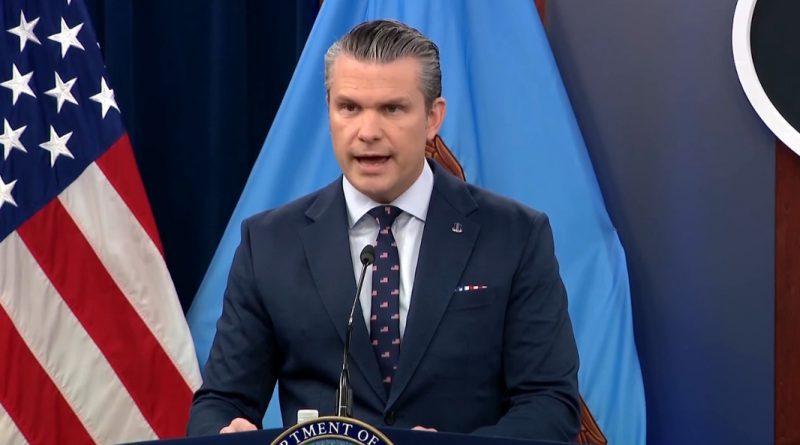
Speaking at a Pentagon briefing, Hegseth said the younger Khamenei had issued only a written statement following the attacks and had not appeared publicly in audio or video since an Israeli strike early in the war killed members of his family, including his father, former Iranian leader Ali Khamenei.
“We know the new so-called not-so-supreme leader is wounded and likely disfigured,” Hegseth said. He added that the absence of a public appearance suggested the Iranian leader was injured and in hiding, questioning his legitimacy and ability to govern.Iranian officials have acknowledged that Mojtaba Khamenei was wounded but dispute the severity of the injuries.
Iran’s ambassador to Japan, Peyman Saadat, told Asahi TV that the Iranian leader had suffered injuries during the conflict but remained capable of carrying out his duties. “He is a functioning leader,” Saadat said, adding that his condition had not impaired his ability to govern.
Hegseth and Dan Caine, chairman of the Joint Chiefs of Staff, said U.S. military operations in Iran have focused on degrading Tehran’s missile and drone capabilities as well as elements of its naval forces.
The briefing came as Washington increased military pressure on Iran following nearly two weeks of strikes carried out by the United States and Israel against Iranian military infrastructure.
Officials said additional U.S. firepower was being sent to the region as the conflict widened across the Middle East.
During the briefing, Hegseth said U.S. forces would continue their campaign without easing pressure on Iran’s military.
“We will keep pressing, keep pushing, keep advancing,” Hegseth said. “No quarter, no mercy for our enemy.
”The phrase “no quarter” refers to refusing to spare an opponent who attempts to surrender, a practice prohibited under the laws of armed conflict.
Reports during the conflict have indicated Iranian drone activity in several countries across the Gulf and Middle East, including Kuwait, Iraq, the United Arab Emirates, Bahrain and Oman.
The fighting has also affected U.S. forces in the region. Six U.S. service members died in an aircraft crash in Iraq during the conflict, U.S. officials said.