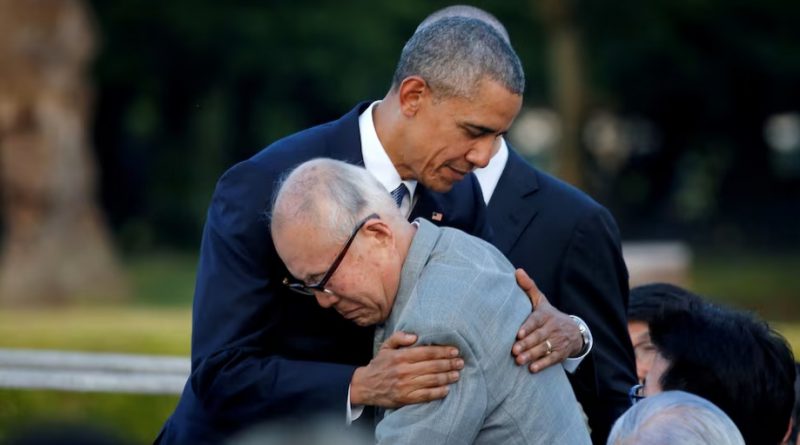
Hiroshima survivor Shigeaki Mori, embraced by Obama during landmark visit, dies at 88
Tokyo — Shigeaki Mori, a survivor of the 1945 Hiroshima atomic bombing who gained international recognition after being embraced by former U.S. President Barack Obama during a historic 2016 visit, has died at the age of 88, Japan’s Jiji Press reported on Tuesday, citing local sources.
Mori died on March 14 at a hospital in Hiroshima, according to the report.
Mori became widely known after Obama’s visit to Hiroshima Peace Memorial Park in May 2016, the first by a sitting U.S. president.
Images of Obama embracing a tearful Mori came to symbolize a moment of reconciliation between the United States and Japan, more than seven decades after the end of World War Two.
The visit marked a significant diplomatic gesture, highlighting efforts to acknowledge the human cost of nuclear warfare while stopping short of a formal apology for the atomic bombing.
Mori was eight years old when the United States dropped an atomic bomb on Hiroshima on August 6, 1945. The explosion flattened the city and left him unconscious from the blast.
The bombing, followed three days later by a second atomic attack on Nagasaki, remains the only instance of nuclear weapons used in war. The two cities have since recorded approximately 550,000 deaths, including those who succumbed to radiation-related illnesses in the years that followed.
Three decades after the bombing, Mori began a sustained effort to identify victims who had been cremated at his elementary school playground in the immediate aftermath of the attack.
His research extended over decades and led to the identification of 12 Americans who died in the bombing, contributing to historical documentation of the event.
Survivors of the atomic bombings, known in Japan as “hibakusha,” have played a central role in preserving testimonies of the attacks.
With their numbers steadily declining due to age, their accounts remain critical to ongoing global debates on nuclear disarmament and the humanitarian consequences of nuclear weapons.