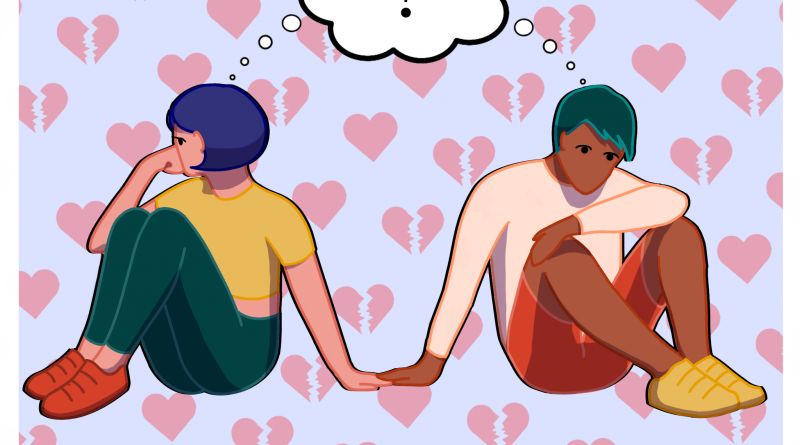
Blurred boundaries, lasting impact: how “situationships” are affecting Gen Z mental health
“It looked like a relationship from the outside, but inside it felt like uncertainty every single day.”
Ambiguous romantic arrangements, often referred to as “situationships”, are increasingly shaping relationship patterns among younger adults, particularly within Generation Z.
These arrangements, which typically lack clear commitment or defined expectations, are being linked by mental health practitioners to rising levels of emotional stress, anxiety and self-doubt among young people.Mental health professionals and counsellors say the defining feature of such relationships is uncertainty.
Unlike traditional partnerships, situationships often operate without mutual agreement on exclusivity, long-term intent or emotional boundaries. While some individuals enter these arrangements voluntarily, practitioners report that many struggle with the psychological consequences over time.
A Delhi-based clinical psychologist said that the lack of clarity can create a persistent state of emotional instability. “Human beings generally seek predictability in close relationships,” the psychologist said. “When that predictability is missing, it can lead to heightened anxiety and rumination.”
A 23-year-old postgraduate student from Chandigarh, who requested anonymity, described her experience in what she later identified as a situationship lasting nearly 18 months. She met her partner through mutual friends during her undergraduate studies. Initially, the connection appeared to follow a conventional trajectory, with frequent communication and emotional intimacy.
Over time, however, she said the relationship became increasingly ambiguous. “We spoke every day, shared everything, but whenever I asked what we were, the answer would change,” she said. “Sometimes it felt like a relationship, sometimes it didn’t exist at all.”The absence of definition led to repeated cycles of reassurance and withdrawal.
According to her account, periods of closeness were often followed by emotional distance, leaving her uncertain about the status of the relationship. “You start questioning yourself,” she said. “Whether you are asking for too much, or whether something is wrong with you.
”She reported that the experience affected multiple aspects of her daily life. Academic performance declined, sleep patterns became irregular, and she experienced persistent stress. “I would check my phone constantly,” she said. “Even small changes in his behaviour would affect my entire day.
”The relationship ended without a formal conversation, which she described as “an absence rather than a breakup”. The lack of closure prolonged the emotional impact. “It’s harder to move on from something that was never clearly defined,” she said.
Counsellors working with young adults report that such experiences are increasingly common. A therapist based in Mumbai said that many clients describe similar cycles of emotional dependence and ambiguity. “There is often a mismatch in expectations,” the therapist said.
“One person may treat it as a committed relationship, while the other maintains distance.”This dynamic can lead to what psychologists describe as intermittent reinforcement, where inconsistent emotional responses strengthen attachment rather than weaken it. “The unpredictability keeps people engaged,” the therapist said.
“They hold on to the positive moments and hope they will return.”Research in behavioural psychology has long established that inconsistent rewards can create strong behavioural patterns, a concept practitioners say is relevant in understanding why individuals remain in such arrangements despite distress.Social factors also contribute to the prevalence of situationships.
A sociology researcher at a university in Bengaluru said that shifting attitudes toward commitment, combined with increased use of dating applications, have altered relationship norms. “There is greater flexibility, but also greater ambiguity,” the researcher said. “Labels are often avoided to keep options open.”
Medical and mental health professionals emphasise that prolonged emotional stress can have measurable effects on physical health. A general physician in Srinagar said that patients in their late teens and early twenties increasingly present with stress-related symptoms, including headaches, fatigue and gastrointestinal issues.
“While these symptoms are not always directly attributed to relationships, discussions often reveal underlying emotional stress,” the physician said. “Chronic stress can disrupt sleep, weaken immunity and affect overall well-being.
”Psychologists note that unresolved emotional strain can also contribute to anxiety disorders and depressive symptoms. The absence of closure, in particular, is cited as a factor that complicates recovery. “Closure provides a cognitive endpoint,” the Delhi-based psychologist said. “Without it, individuals may continue to revisit the experience repeatedly.”
Technology plays a central role in shaping these relationship dynamics. Messaging platforms and social media enable continuous contact, but also create new forms of uncertainty. Read receipts, delayed responses and online activity indicators can all become sources of anxiety.
The Chandigarh student said that digital communication intensified her experience. “You can see when someone is online, but not replying to you,” she said. “It makes you overthink everything.”Experts say that constant connectivity can blur emotional boundaries, making it difficult for individuals to disengage.
“In earlier generations, physical distance created natural pauses,” the Mumbai-based therapist said. “Now, the connection is always present, even when the relationship is unclear.”
Mental health professionals emphasise the importance of awareness and communication in addressing the impact of situationships. Identifying patterns of uncertainty and emotional imbalance is often the first step in intervention.Therapists report that encouraging individuals to establish personal boundaries and articulate expectations can help reduce distress.
“Clarity, even if it leads to an uncomfortable outcome, is generally healthier than prolonged ambiguity,” the Delhi-based psychologist said.Educational institutions and youth organisations have also begun incorporating discussions on relationship health into counselling services.
A student counsellor at a university in Punjab said that workshops on emotional well-being now include topics such as communication, consent and boundary-setting.
The Chandigarh student said that seeking professional help was a turning point in her recovery. Through counselling, she began to recognise patterns in the relationship and their impact on her mental health. “It helped me understand that it wasn’t just about the other person,” she said.
“It was also about what I was accepting.”She added that the experience has influenced her approach to future relationships. “Now I know that clarity is not something extra,” she said. “It’s something necessary.”