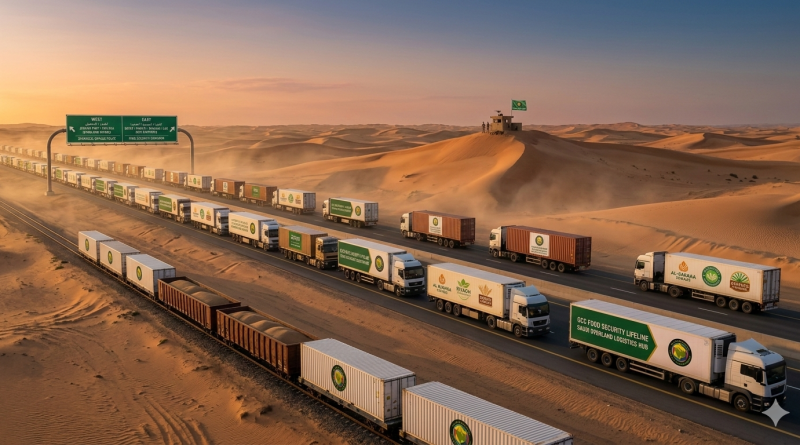
Gulf food lifeline shifts to Saudi land routes as war threatens Hormuz trade
DUBAI, March 6 – Gulf states may have to rely increasingly on overland food deliveries from Saudi Arabia if the ongoing conflict involving the United States, Israel and Iran continues to disrupt maritime shipping through the Strait of Hormuz and restrict regional airspace, analysts said on Thursday, warning the region’s heavy dependence on imported food could expose supply chains to shortages and higher prices.
Countries within the Gulf Cooperation Council import up to 90% of their food, making the stability of shipping routes through the Gulf critical for supply flows. Analysts say prolonged disruption could begin to strain inventories, particularly if commercial shipping and aviation routes remain restricted.Dependence on Hormuz trade routeMore than 70% of food supplies entering the GCC region pass through the Strait of Hormuz, according to Neil Quilliam of Chatham House. The narrow waterway linking the Persian Gulf to global shipping lanes is a key artery for trade and energy exports.“With over 70 percent of GCC foodstuffs being imported through the Strait of Hormuz, Gulf states face shortages if the war persists,” Quilliam said. He noted that governments across the region have taken steps in recent years to diversify suppliers and build strategic reserves to cushion short-term disruptions.However, those measures may provide only temporary relief if the conflict continues. “While GCC countries have taken steps to diversify suppliers and ensure sufficient stores to withstand disruption, this can only last several months,” Quilliam said. “At this point, price increases and longer lead times will start to hit the markets.”Saudi Arabia seen as overland hubAnalysts say land routes through Saudi Arabia could become a crucial alternative supply channel for neighbouring states if maritime bottlenecks intensify.Commodities analyst Ishan Bhanu said the closure or disruption of major logistics hubs could quickly affect supply chains. “The biggest immediate effect will be due to the blockade of Jebel Ali Port, serving about 50 million people,” Bhanu said.In such a scenario, countries including Qatar, Kuwait and Bahrain could effectively become dependent on land-based transport routes through Saudi Arabia for essential food imports. Analysts say this would significantly increase logistical complexity and transportation costs.
The port of Jebel Ali in Dubai is one of the region’s largest trade hubs, acting as a distribution centre for food and consumer goods across the Gulf.Strategic reserves and market responseDespite the risks, Gulf authorities say supply levels remain stable for now. The United Arab Emirates has said its strategic reserves of key food and consumer goods can cover between four and six months of demand.Officials have also urged residents to report unjustified price increases through a government hotline designed to prevent market manipulation during periods of uncertainty.Retailers across the Gulf say supermarket shelves remain largely stocked, although suppliers are taking longer to replenish certain products as logistics chains adjust to the evolving security situation.
Iranian missile strikes targeting Gulf areas since Saturday triggered brief bouts of panic buying in some supermarkets, highlighting the sensitivity of regional markets to geopolitical tensions.“Perception of risk matters, and even if stocks are sufficient now, public runs on supermarkets can spook the public,” Quilliam said.