Saudi warns Iran against strikes, signals possible retaliation
RIYADH, March 8 – Saudi Arabia has warned Iran that continued attacks on the kingdom or its energy infrastructure could trigger retaliation and potentially lead Riyadh to allow U.S. forces to use bases in the country for military operations, four sources familiar with the matter told Reuters
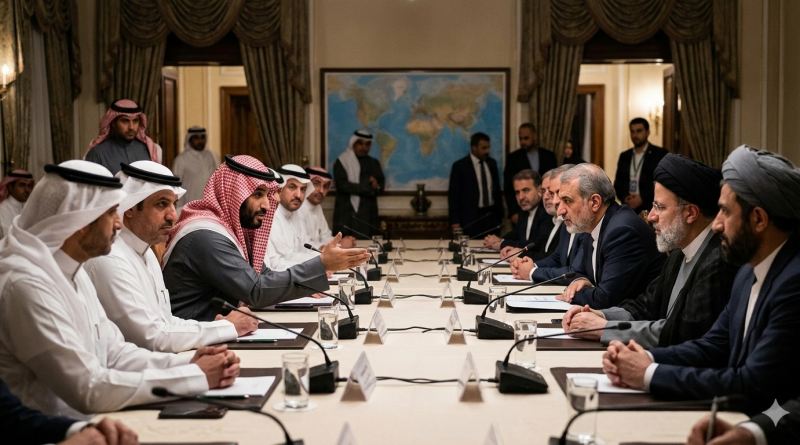
.The message was conveyed to Tehran ahead of remarks on Saturday by Iranian President Masoud Pezeshkian, who apologised to Gulf states for recent Iranian actions that have heightened regional tensions.Two days earlier, Saudi Foreign Minister Prince Faisal bin Farhan spoke with Iranian Foreign Minister Abbas Araqchi and outlined Riyadh’s position, according to the sources. Saudi Arabia said it favours a diplomatic settlement to Iran’s conflict with the United States but warned that further attacks on Saudi territory or energy facilities could compel the kingdom to respond.The sources said Prince Faisal stressed that Riyadh remained open to mediation efforts aimed at de-escalation and a negotiated resolution to the crisis. He also underlined that neither Saudi Arabia nor other Gulf states had allowed the United States to use their airspace or territory to conduct strikes on Iran.However, the minister cautioned that if Iranian strikes continued against Saudi territory or critical energy infrastructure, Riyadh could permit U.S. forces to use their bases for operations and would consider retaliatory measures.Saudi and Iranian foreign ministries did not immediately respond to requests for comment.
The warning comes amid heightened regional tensions following drone and missile strikes launched by Iran against several Gulf states over the past week.Saudi Arabia, the United Arab Emirates, Kuwait, Qatar and Bahrain have all been targeted by attacks linked to Tehran, according to the sources. The strikes followed the killing of Iran’s Supreme Leader Ayatollah Ali Khamenei on the first day of the war that erupted after U.S. and Israeli military operations against Iran.Iran responded by launching attacks on Israel and Gulf Arab states that host U.S. military facilities, while Israel has also targeted Lebanon’s Iran-backed Hezbollah armed group as part of the expanding conflict.
Despite the escalating violence, diplomatic channels between Riyadh and Tehran remain open. The sources said Saudi Arabia has maintained regular contact with Iranian officials through its ambassador since the U.S. and Israeli campaign against Iran began on Feb. 28 following the collapse of negotiations over Tehran’s nuclear programme.Araqchi said in an interview on Saturday that he had remained in constant communication with Prince Faisal and other Saudi officials. He said Riyadh had assured Tehran it would not allow its territory, waters or airspace to be used for attacks on Iran.In his remarks, Pezeshkian said Iran’s temporary leadership council had approved a suspension of attacks on neighbouring countries unless those states were used as a launch point for strikes against Iran.The apology appeared aimed at easing tensions with Gulf governments concerned about the risk of the conflict spreading further across the region and threatening energy infrastructure and shipping routes.The exchanges highlight the delicate position faced by Gulf states seeking to avoid deeper involvement in the conflict while balancing security ties with Washington and growing regional instability.