Sahel Forests Emerge as Strategic Strongholds in Escalating Militant Insurgency
Dakar-Forests and protected reserves across the Sahel have evolved from temporary refuges into permanent operational bases for Islamist militant groups, complicating military campaigns and reshaping the security landscape across Mali, Burkina Faso and Niger, according to analysts, officials and conflict monitors.
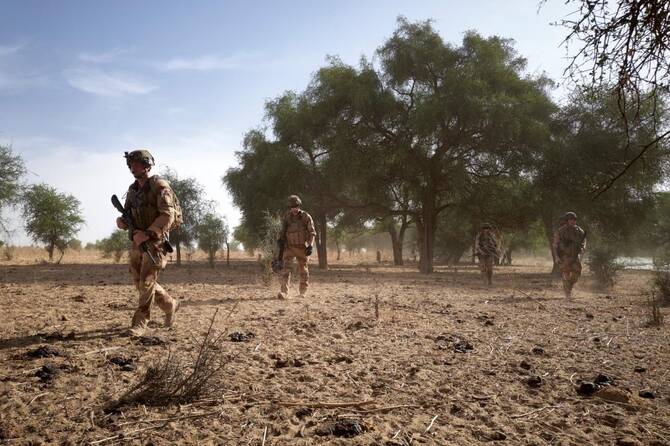
The growing strategic importance of remote forested areas has prompted governments in the region to designate large swaths of land as military zones, reflecting concerns that insurgent groups are using dense vegetation to plan attacks, move personnel and sustain logistical networks beyond the reach of state forces.
In Mali, authorities this month declared the 80,000-hectare Faya forest and 38 other forests and parks off-limits to civilians, describing them as potential sanctuaries for armed groups. The measure followed a series of major attacks carried out by Jama’at Nusrat al-Islam wal-Muslimin (JNIM), Al-Qaeda’s affiliate in the Sahel, and allied Tuareg separatist fighters.
The forests covered by the decree form a broad corridor stretching across southern Mali from the borders with Senegal and Mauritania to Guinea and Côte d’Ivoire.
Analysts say such areas provide militants with significant operational advantages. Sparse state presence, limited infrastructure and the absence of permanent settlements make surveillance and enforcement difficult, allowing insurgent groups to establish enduring footholds.
“These are large natural areas that are sometimes not very well controlled by the state,” said Franklin Nossiter, a Sahel analyst at the International Crisis Group. He said the lack of military installations and administrative infrastructure in many forest zones has made them attractive locations for militant activity.
Similar security measures have been implemented in neighboring Burkina Faso and Niger, where authorities have increasingly restricted civilian access to forested regions associated with militant operations.
In Niger’s Torodi region, a heavily wooded area near the Burkina Faso border, officials have designated sections of territory as restricted military zones due to persistent attacks by armed groups.
Local industry representatives say militants regard logging and transport activities as threats to their shelter networks. A timber sector official told AFP that dozens of trucks had been destroyed and more than 20 transport workers killed in attacks linked to insurgent groups operating in the area.
Security researchers argue that militant organizations now view forests as more than defensive hideouts. Samir Bhattacharya of the Observer Research Foundation said sustained military pressure in urban centers and improved aerial surveillance have encouraged insurgents to establish permanent bases in remote woodland areas.
The terrain also offers economic opportunities. Militants have increasingly exploited informal economies linked to mining, livestock grazing, smuggling routes and poaching to finance their operations and strengthen local influence.
According to the Armed Conflict Location & Event Data Project (ACLED), the continued use of forests and nature reserves by militant groups demonstrates a deliberate long-term strategy rather than temporary adaptation.
JNIM initially expanded through the W-Arly-Pendjari complex of parks and reserves spanning parts of Benin, Burkina Faso and Niger. The region’s proximity to several international borders has enabled insurgents to move across jurisdictions while avoiding concentrated military pressure.
Meanwhile, the Islamic State in the Sahel Province (ISSP) has developed networks in forested and hilly areas along the Niger-Nigeria frontier, conflict monitors say.
Military efforts to dislodge militants have faced significant challenges. Analysts note that dense vegetation reduces the effectiveness of drone surveillance and air strikes, while difficult terrain limits the mobility of armored vehicles and conventional ground forces.
Experts also caution that aggressive counterinsurgency operations in forest areas could carry risks if civilians are harmed or displaced. Such outcomes, they argue, could fuel local grievances and potentially aid recruitment efforts by militant organizations.
The growing contest for control of the Sahel’s forests underscores the evolving nature of the region’s insurgencies, where geography, local economies and weak state presence have become increasingly central to the conflict.