Iraqi Calligrapher Completes Monumental Handwritten Qur’an After Six Years of Devotion
Istanbul – An Iraqi calligrapher has completed an extraordinary handwritten manuscript of the Holy Qur’an after six years of continuous dedication, patience, and artistic discipline. The massive work stands as a rare example of devotion expressed through traditional Islamic calligraphy, reflecting both spiritual commitment and cultural heritage.
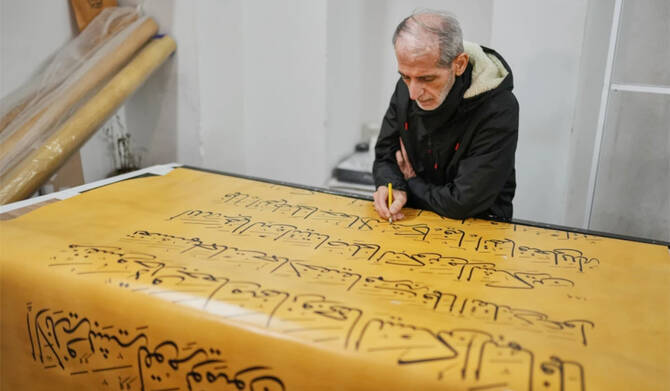
Ali Zaman, a 54-year-old artist originally from northern Iraq, finished the monumental manuscript in Istanbul, a city long regarded as a global center for the art of Islamic calligraphy. The project represents years of meticulous effort, carried out with deep reverence and focus.
The completed Qur’an consists of 302 double-sided scrolls, each measuring around four meters in length and one and a half meters in width. Every sheet was specially prepared using traditional materials, giving the manuscript a parchment-like texture suited for long-term preservation.
Zaman worked on the manuscript from early morning until late evening for six years. He used a small room in a historic mosque as his workspace, maintaining a disciplined routine that allowed him to remain fully immersed in the process.
For the calligrapher, the project was not simply an artistic task but a spiritual journey. He described the experience as deeply fulfilling, expressing gratitude for having the strength and time to complete such an ambitious and meaningful work.
Islamic calligraphy holds a special place in Muslim artistic traditions. Over centuries, it has been used not only to preserve the Qur’an but also to decorate mosques, manuscripts, and architectural spaces with elegance and devotion.
In Turkiye, calligraphy flourished during the Ottoman era when it received strong institutional support. This legacy has continued into the present, with Istanbul remaining a hub for artists who practice and preserve this classical art form.
Art scholars describe calligraphy as more than visual expression. It is widely viewed as an act of worship, especially because Islamic artistic tradition emphasizes non-figurative representation, allowing script to become a central form of beauty and meaning.
Zaman developed his interest in calligraphy during childhood and later decided to move to Istanbul to refine his skills. He felt the city offered a more supportive environment for traditional Islamic arts and provided access to mentors and institutions.
The scale of the manuscript has drawn attention from art observers and cultural enthusiasts. Although it has not yet received official global recognition, it is being described as one of the largest handwritten Qur’an manuscripts ever created.
Throughout the six-year process, Zaman’s family witnessed his intense commitment. Long hours meant limited time at home, but the completion of the manuscript has brought a sense of relief and pride to those closest to him.
The scrolls are now carefully stored and protected from environmental damage. Zaman hopes the manuscript will eventually be displayed publicly in a museum or cultural institution where it can be appreciated by visitors from around the world.