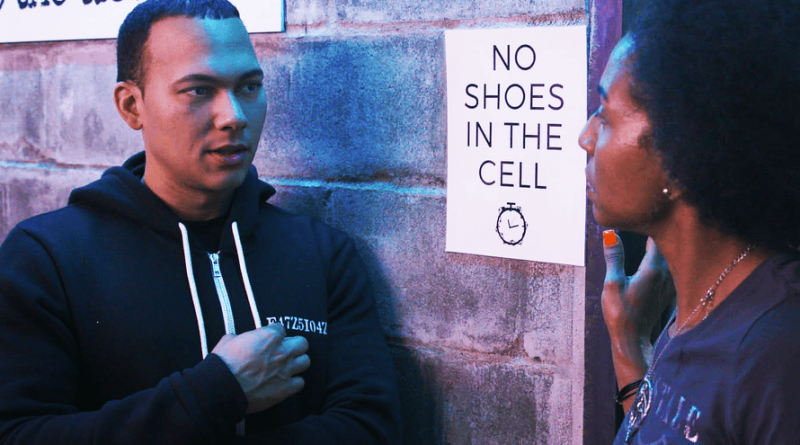
From Prison Cell to Fitness Empire: How One New York Gym Became a Lifeline After Incarceration
“It’s a different justice when you get out and you have a check in week one, instead of $40 and a bus ticket and no idea when you’ll get a job.”
More than a decade ago, filmmaker Debra Granik met Coss Marte in a diner on Manhattan’s Lower East Side, where he described an idea that many investors and employers initially dismissed as unrealistic: a fitness business staffed almost entirely by people returning from prison.
Marte, a former drug dealer who had spent years incarcerated before the age of 27, had developed a personal prison-cell workout routine while serving time and emerged with a plan to turn that discipline into a business model. His proposal was simple but unconventional for New York’s boutique fitness market build a gym where formerly incarcerated people would not only find work, but also become trainers, mentors and examples of successful re-entry into society.
That idea became Conbody, a fitness company that now stands as both a business and a social intervention in one of New York City’s most rapidly changing neighborhoods.
It is also the subject of Conbody vs Everybody, Granik’s five-hour documentary series released on the Criterion Channel in the United States, tracing more than a decade of struggle, expansion and institutional resistance around Marte’s effort to create employment pathways away from the prison system.
Granik, known for films such as Winter’s Bone and Leave No Trace, originally intended to make a drama about life after incarceration. Instead, she found in Marte a long-form documentary subject whose personal story reflected broader structural questions about criminal justice, housing, labor access and urban inequality.
“He was defying all the odds,” Granik said, reflecting on their first meeting. Marte’s ambition was not only to avoid returning to prison, but to build an enterprise that could help others avoid the same cycle. “He was using all his energy to not get re-ensnared in the criminal justice system,” she said.
Marte grew up on the Lower East Side as the son of Dominican immigrants. His mother worked in a clothing factory and his father operated a neighborhood bodega. After returning from prison, he found that the area had changed dramatically. Boutique fitness studios were multiplying, rents were rising and wealthier residents were moving into what had long been a working-class immigrant neighborhood.
He recognized both a challenge and an opportunity. He believed affluent customers would pay for intense bodyweight workouts modeled on prison training routines, particularly if the business was framed around second chances and social impact. Conbody marketed its classes with slogans such as “do the time,” combining hard physical training with the personal narratives of its instructors.
Marte proved adept at navigating two worlds at once. He sold customers on the fitness experience while persuading investors to support a business model many viewed as too risky because of its workforce. Some openly questioned whether formerly incarcerated employees could be trusted in a customer-facing environment.
The skepticism reflected a broader contradiction in the startup culture of the mid-2010s, Granik said: the public celebration of entrepreneurship as universally accessible often collapsed when social stigma and financial gatekeeping entered the picture. Investors praised innovation in theory, but many hesitated when the founders or staff had criminal records.
The barriers extended beyond funding. One early Conbody location was forced to move because it shared a building with a preschool, raising objections over the presence of former prisoners nearby. Some employees also faced parole restrictions that made ordinary employment nearly impossible. In certain cases, associating with other formerly incarcerated people could itself violate parole terms, creating what Granik described as institutional mechanisms that made re-entry harder rather than easier.
One of the documentary’s early episodes follows Marte and trainer Sultan Malik trying to help a coworker jailed at Rikers Island over parole violations tied to commuting from Long Island to teach fitness classes in Manhattan. The case highlighted how employment itself could become a legal risk for people trying to rebuild their lives.As the business stabilized financially, the role of Conbody expanded.
It became not only a workplace but also an informal support system for employees navigating housing insecurity, grief and rejection from mainstream employers.The documentary follows Tommy, who after spending 27 years incarcerated struggles to secure stable housing and temporarily sleeps at the gym.
Another trainer, Jamal, faces the loss of his son to gun violence. Syretta, one of the few female instructors and someone rebuilding life after nearly 23 years in prison, works toward ending years of parole supervision while establishing herself professionally in fitness.
Many employees secured interviews with mainstream gyms only to be turned away once criminal background checks were completed. The pattern reinforced a reality Marte frequently confronted: society often speaks of rehabilitation while maintaining barriers that make reintegration financially and socially fragile.
The physical transformation of the Lower East Side runs parallel to the human stories in the documentary. Luxury apartment towers replaced older tenement buildings, and commercial rents surged. Real estate marketing promoted the area as a place “at the intersection of grit and glamour,” while longtime residents and small businesses faced displacement.Conbody itself was forced to relocate after its lease was not renewed.
In one sequence, Marte and his team walk through vacant storefronts where monthly rents ranged from $20,000 to $30,000, figures that placed long-term survival in constant doubt.The documentary also captures one of the decade’s stranger symbols of urban branding: Conbody running a prison-themed fitness pop-up inside Saks Fifth Avenue, complete with chain-link fence imagery and staged “mug shots” for clients.
The luxury retailer reportedly viewed the concept as a way to increase foot traffic and encourage shopping through experiential fitness.For Granik, these moments illustrated gentrification not as an abstract policy term, but as a daily accumulation of notices, rent increases and quiet removals. She said the neighborhood’s transformation became inseparable from the story of re-entry because economic displacement and criminal stigma often reinforced each other.
Politics also entered the family story. Marte’s younger brother, Christopher Marte, became active in organizing against displacement and privatization, later winning election to the New York City Council in 2022 after years of grassroots activism and involvement in Black Lives Matter protests.
Coss Marte, initially more focused on private entrepreneurship than public protest, gradually expanded his own advocacy beyond business. By the end of the documentary, he is visiting prisons across the country, leading fitness classes and speaking directly with incarcerated people about life after release.
He argues that meaningful justice begins not at sentencing reform but at re-entry through immediate work, housing and income rather than symbolic second chances.“I feel like what we’re doing is real justice,” Marte said. “It’s a different justice when you get out and you have a check in week one, instead of $40 and a bus ticket.”In New York, about 188,000 people are released from prison each year, a figure cited throughout the documentary.
Conbody and Marte’s cannabis business, Conbud, employ only dozens of them, but he sees each job as a direct challenge to a system built around permanent exclusion.The team now works with youth in juvenile facilities, trains people inside Rikers Island and continues hiring formerly incarcerated workers. Marte says the goal is not simply employment, but changing how people view those leaving prison.“If they’re seeing somebody come out of the system,” he said, “look at them different and change perceptions.”